.gif)

Download Mobile App 






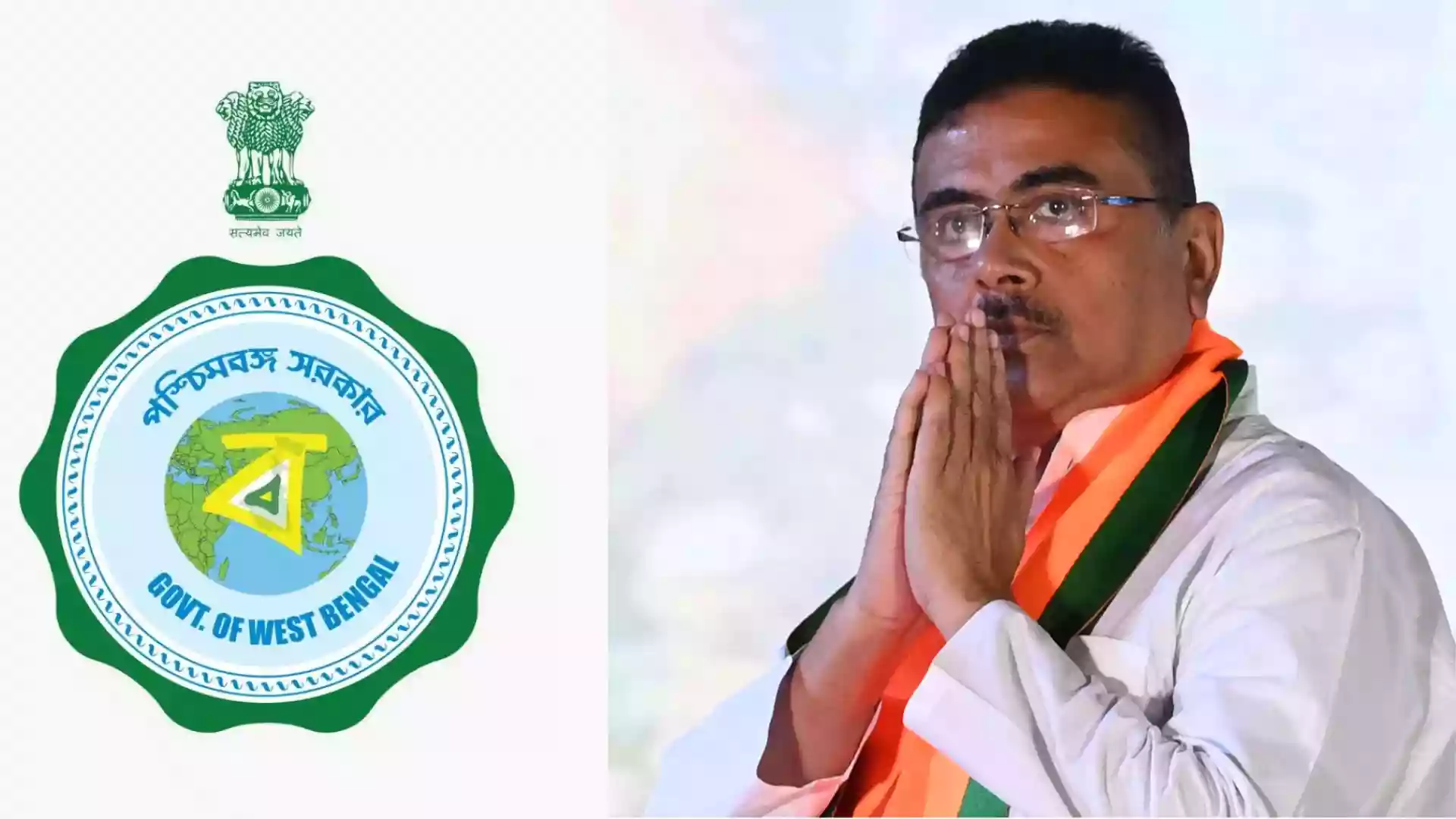
The West Bengal government has initiated a major rebranding exercise across official platforms and public infrastructure following the change in political leadership in the state. The administration led by Chief Minister Suvendu Adhikari has started removing the “Biswa Bangla” logo and the blue-and-white visual identity that had become closely associated with the tenure of former Chief Minister Mamata Banerjee. In its place, the government is introducing India’s national emblem, the Ashoka Pillar, along with saffron-themed graphics across digital and physical government assets.
One of the most visible changes has taken place at Salt Lake Stadium, where the prominent “Biswa Bangla” signage at the main entrance has been removed. The signage has now been replaced with the Ashoka Pillar, marking a significant visual shift in one of Kolkata’s most recognisable public venues. Similar changes are being implemented at several government-controlled spaces as part of the broader effort to redefine the state’s official branding and administrative presentation.
The redesign is also visible on the West Bengal government’s official digital portal, “Aegiye Bangla.” Earlier, the website prominently featured a blue-and-white colour palette along with the globe-shaped Bengali letter “B” logo that symbolised the “Biswa Bangla” initiative. The updated portal now displays a white background, the national emblem, and a photograph of Chief Minister Suvendu Adhikari. Icons representing key departments, including tourism, agriculture, and industry, have also been redesigned using saffron-coloured graphics and new visual elements.
The “Biswa Bangla” brand was launched on September 16, 2013, during the tenure of Mamata Banerjee. The initiative was created to promote Bengal’s handicrafts, cottage industries, and cultural identity at the national and international level. The logo, designed around the Bengali letter “B” and shaped like a globe, was personally created by Mamata Banerjee. Over the years, the branding became one of the most recognisable visual symbols associated with the previous state administration and was extensively used across government programmes, public infrastructure, and promotional campaigns.






 West Bengal
 Bihar
Bihar Uttar Pradesh
 Jharkhand