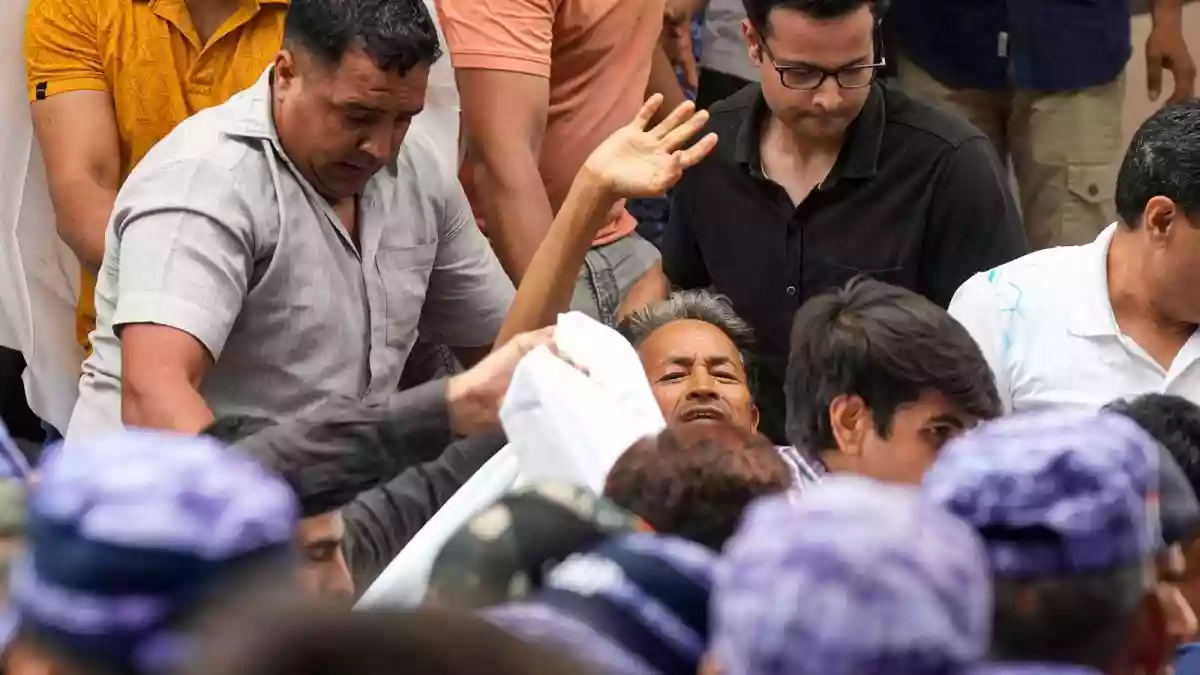
Sonam Wangchuk vows to continue hunger strike as CJP reclaims Jantar Mantar stage
.gif)

Download Mobile App 







As the rhythmic chants of "Jai Maa Durga" faded into the evening haze along Hooghly's banks, what promised to be a sacred send-off for the goddess turned into a nightmare of loss in Hooghly district's Mankundu's Shantinagar neighborhood—Ekadashi's tide claiming two vibrant young men, Arup Roy (36) and Ankush Das (28), as they waded into the Ganges to immerse their club's idol at Srimani Ghat in Bhadreswar. Devoted members of the Mukti Sangh club, where they had poured heart and sweat into Puja preparations from pandal setup to garland weaving, the duo embodied the festival's spirit of selfless service—only for the river's unforgiving current, swollen by high tide, to swallow them whole mid-ritual. Eyewitnesses watched in frozen horror as the men, tasked with guiding the clay figure into the depths, were yanked under without warning, triggering an immediate but fruitless scramble by fellow club members, security personnel, and patrolling police. With search operations stretching into the night and resuming at dawn today, involving boats, divers, and vigilance along adjacent ghats, the incident has draped Mankundu's Shantinagar in a shroud of sorrow, amplifying calls for mandatory lifelines and tide warnings at immersion sites across West Bengal's riverine fringes. In a Puja season already marred by similar tragedies, Arup and Ankush's disappearance isn't just a statistic—it's a gut-wrenching echo of devotion's double edge, where joy's high tide crashes into grief's undertow, leaving families adrift in unanswered prayers.
Arup was the club's unofficial backbone—coordinating dhunuchi dances and ensuring eco-friendly paints for the idol. Ankush, younger and full of fire, juggled college dreams with volunteer shifts, his laughter a staple during late-night bhog sessions. Around yesterday evening, as the immersion procession wound from Mankundur's lanes to Bhadreswar's historic Srimani Ghat— a stone's throw from Hooghly's churning expanse—the air thrummed with conch shells and teenage drummers. Sevral club members, locals in starched kurtas and women in flowing saris, arrived amid chants, the durga idol gleaming under the overcast sky. But as the moment arrived to lower Maa Durga into the sacred flow, the tide's deceptive pull—fueled by upstream releases and monsoon remnants—turned ritual reverence into raw peril, a stark reminder that the Ganges, Bengal's lifeblood, harbors a merciless underbelly during festival peaks.The plunge happened in a heartbeat, around night, as Arup and Ankush, roped with the idol's base for stability, stepped into waist-deep water that belied its ferocity. Splashes, shouts, and a desperate lunge by bystanders that yielded only empty ripples. The Bhadreswar police station, while impromptu rescuers—fishermen with nets and youths stripping to dive—scoured the surface under fading light. The current, clocked at 4-5 knots by later estimates, carried any trace downstream towards Champdani's bends, mocking the efforts. By today midight, as immersion concluded in hushed tones—idols bobbed forlornly without their handlers—word rippled back to Mankundu's Shantinagar area, shattering homes. Bhadreswar police, no strangers to immersion mishaps, mobilized a multi-agency response: Hooghly River Police launches with spotlights, NDRF divers on standby, and volunteers scanning from Howrah Bridge vantage points.
Dawn today brought renewed vigor: Motorized boats from Uttarpara chugged upstream, drones buzzed over eddies near Tribeni, and locals formed human chains along lesser-known jetties, their faces gaunt with vigil. Yet, hours in, no sign—only driftwood and festival debris mocking the hunt. Forensic teams combed the ghat for clues like dropped phones or sandal marks, while autopsies loomed unspoken, a grim protocol if bodies surface. .The grief's tendrils have snaked through Mankundu like monsoon roots, binding families in shared anguish. Arup's kin, rice traders by trade, shut shop for the week, their courtyard a murmur of relatives fielding media calls. Ankush's father pored over river charts by lantern light, plotting "impossible paths" the boys might have taken. This tragedy spotlights systemic gaps: No real-time tide alerts at rural ghats, scant life vests for volunteers, and over-reliance on "auspicious timing" over safety drills. As of latest update, the search presses on—a fragile thread of hope amid the Ganges' vast indifference. If the waters yield their secret, it will be bittersweet closure; if not, a hollow rite by the banks. In Puja's paradox, where creation dances with destruction, Arup and Ankush's story etches a deeper devotion: To life preserved, rituals rethought, and the river revered, not romanticized. Till then, Mankundu waits on the shore, eyes fixed on the horizon, where every ripple whispers "return."



.webp)


 West Bengal
 Bihar
Bihar Uttar Pradesh
 Jharkhand