
Sonam Wangchuk vows to continue hunger strike as CJP reclaims Jantar Mantar stage
.gif)

Download Mobile App 






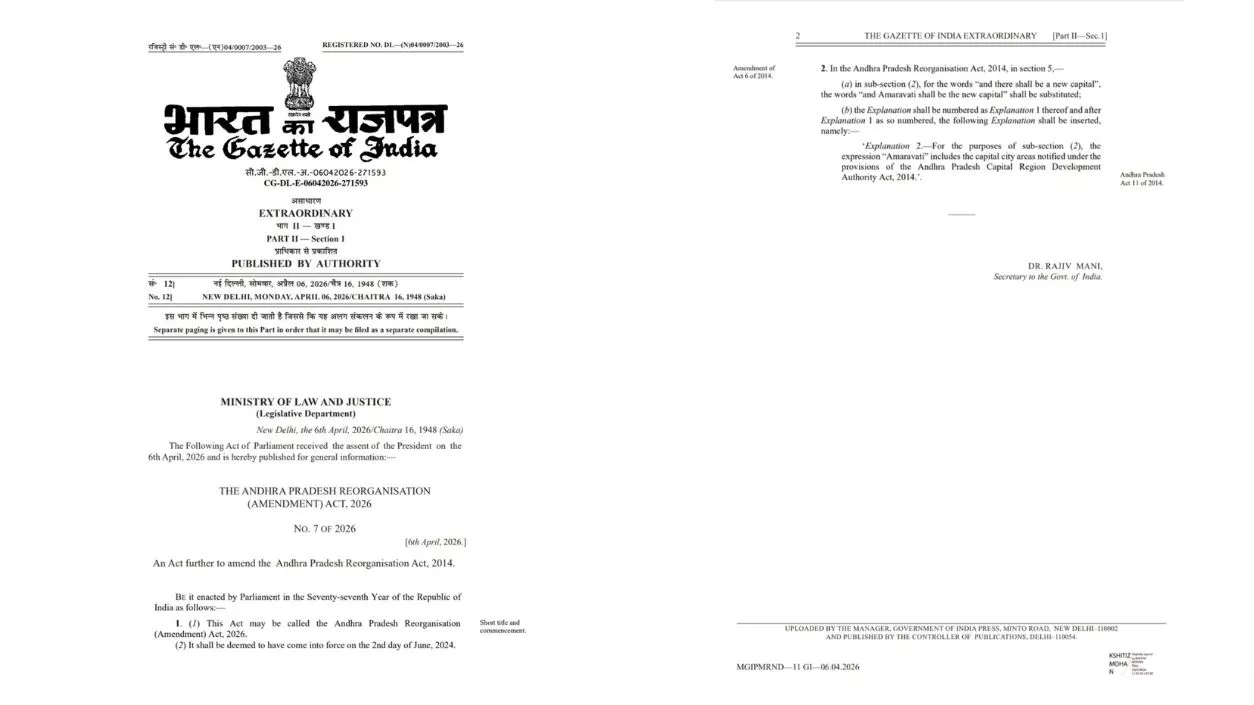
Amaravati has officially gained legal recognition as the capital of Andhra Pradesh following the presidential assent to the Andhra Pradesh Reorganisation (Amendment) Act, 2026. The approval by President Droupadi Murmu marks the culmination of years of political, administrative, and civic efforts to establish Amaravati as the permanent seat of the state government. The development has been welcomed widely by state leaders, citizens, and farmers who have long championed the cause.
Andhra Pradesh Chief Minister N. Chandrababu Naidu expressed profound gratitude to the President, describing the moment as the fulfilment of a “long-cherished aspiration” of the people. He also thanked the Union Government led by Narendra Modi and Members of Parliament who supported the Bill. Emphasising the emotional and economic significance, Mr. Naidu hailed the milestone as a “victory for the people of Andhra Pradesh,” highlighting the sacrifices of Amaravati farmers who played a pivotal role in sustaining the movement.
Echoing these sentiments, Andhra Pradesh Minister for Education and IT, Nara Lokesh, called the day historic and said the President’s approval has turned the long-standing vision of Amaravati into reality. He acknowledged the combined efforts of Parliament members and paid special tribute to the farmers of Amaravati, citing their resilience and support as instrumental in achieving the milestone. BJP state president PVN Madhav described the development as joyous and reaffirmed the party’s commitment to the state’s progress and stability.
With the presidential assent, Amaravati now enjoys permanent legal status as Andhra Pradesh’s capital. The law and judiciary will protect the city’s status, ensuring that administrative and governance functions continue seamlessly. State authorities and political leaders have indicated that they will coordinate to ensure sustained development, infrastructure growth, and economic investment in the capital, reinforcing its position as a central hub for governance and citizen services.









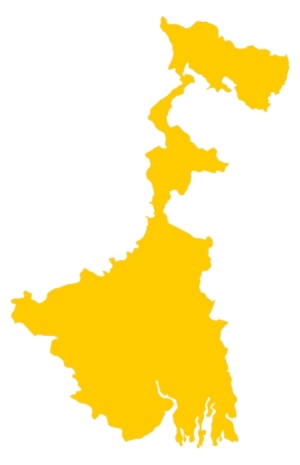 West Bengal
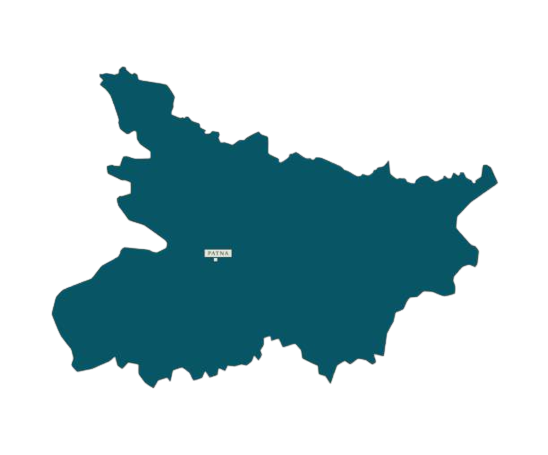 Bihar
Bihar Uttar Pradesh
 Jharkhand