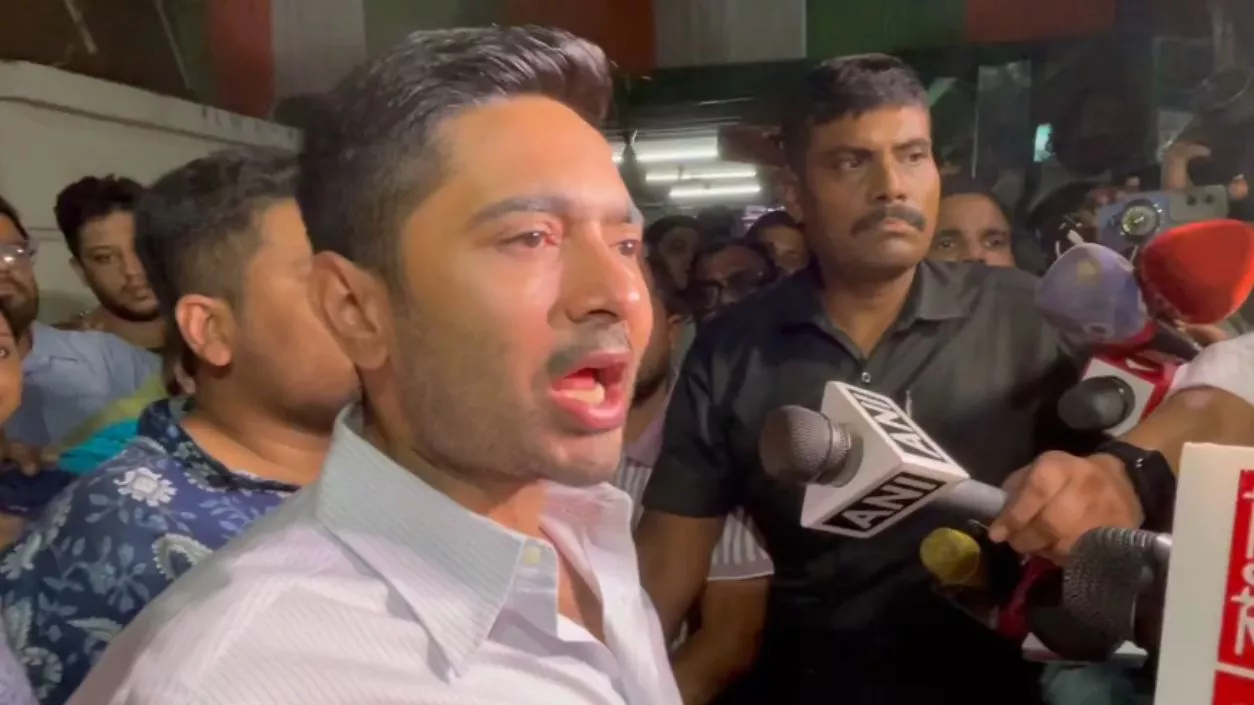
"Why no FIR against Amit Shah?" asks Abhishek as CID serves him fresh summon for June 16
.gif)

Download Mobile App 







West Bengal Chief Minister Suvendu Adhikari on Friday said that eviction drives against illegal encroachments on roads and footpaths would continue across the state, while assuring that rehabilitation measures would be considered for affected hawkers. Speaking at a press conference at the Biswa Bangla Convention Centre, he stated that public convenience and the right of pedestrians to use footpaths would remain the government's priority.
Addressing the issue of encroachments, Adhikari said that footpaths are meant for public use and that no individual has the right to occupy them illegally. He stated that the government would adopt a humane approach in cases where vendors were operating on unused government land without obstructing public movement. However, he said that roads and footpaths in densely populated commercial areas could not be allowed to remain encroached upon. Referring to locations such as New Market, Rajabazar, Kidderpore and Metiabruz, he said public spaces could not be occupied in a manner that disrupted normal movement.
The Chief Minister emphasized that public interest would take precedence over the interests of any specific group. He said he was accountable to the people and that wherever public convenience was affected, the administration would act accordingly. He also criticised opposition to the eviction drives when such objections were based solely on political considerations rather than public welfare concerns.
The issue has gained prominence following eviction drives in areas including Howrah, Sealdah, Jadavpur and Dum Dum. The actions triggered protests by political activists and affected vendors, while concerns were raised regarding rehabilitation. Responding to those concerns, Adhikari said hawkers should initially vacate the occupied areas and that support would gradually be provided through government schemes. He added that the Labour Department already operates schemes for hawkers and that eligible beneficiaries would be able to access those facilities in the future.





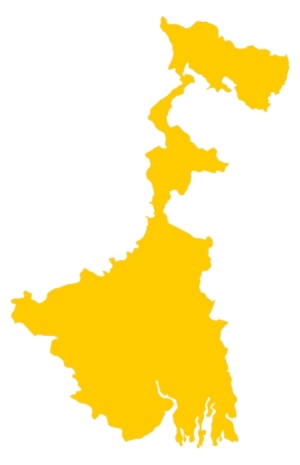 West Bengal
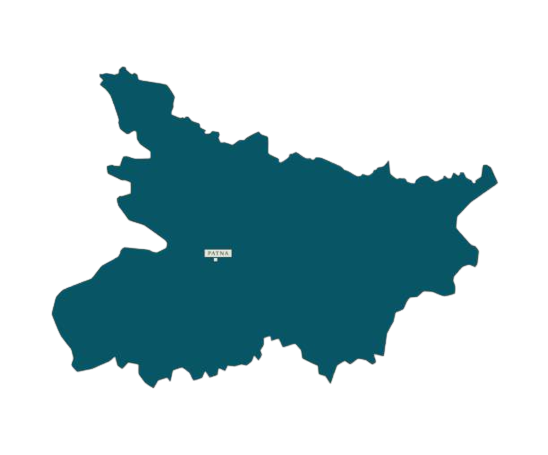 Bihar
Bihar Uttar Pradesh
 Jharkhand