Sonam Wangchuk vows to continue hunger strike as CJP reclaims Jantar Mantar stage
.gif)

Download Mobile App 






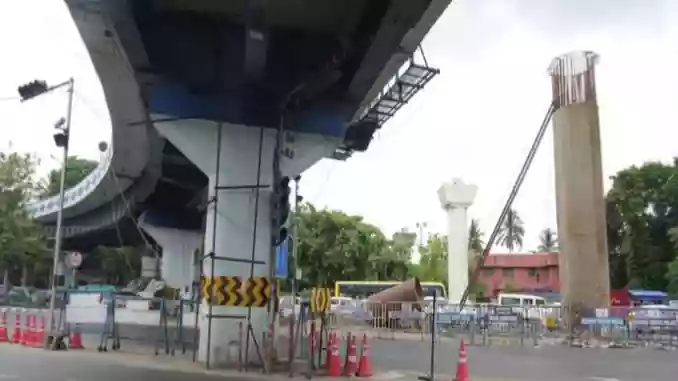
The Calcutta High Court has taken decisive action to address mounting concerns over the Chingrighata Metro project, directing all involved parties to hold an urgent meeting to resolve ongoing issues, as announced today. The court’s order comes in response to a public interest litigation highlighting disruptions caused by the metro construction, particularly around the busy Chingrighata crossing in Kolkata. Residents and commuters have faced severe traffic congestion, safety hazards, and delays due to the ongoing work on the New Garia-Airport Metro Line, prompting the court to push for a collaborative solution.
This directive offers hope for relief in an area where daily life has been significantly impacted by the project’s challenges.The Chingrighata stretch, a critical junction connecting EM Bypass and Salt Lake, has been a hotspot for commuter frustration since metro construction intensified. The litigation, filed by local residents, pointed to poorly managed traffic diversions, inadequate safety measures, and environmental concerns like dust pollution affecting the area.
The court, presided over by a division bench, emphasized the need for coordination among the Kolkata Metro Rail Corporation, Kolkata Municipal Corporation, traffic police, and other stakeholders to address these grievances. The directive underscores the judiciary’s role in balancing urban development with public welfare, a recurring theme in Kolkata’s infrastructure debates.The New Garia-Airport Metro Line, part of Kolkata’s ambitious metro expansion, aims to connect the city’s southern suburbs to Netaji Subhas Chandra Bose International Airport. However, the Chingrighata segment has faced criticism for slow progress and disruptions, with barricades and construction debris narrowing roads and causing hours-long traffic snarls. Local businesses have reported losses, while residents complain of increased air and noise pollution.
The court’s call for a meeting aims to streamline construction timelines, improve traffic management, and ensure safety protocols are in place, addressing concerns that have lingered since the project’s inception.The Calcutta High Court’s intervention follows a pattern of judicial oversight in Kolkata’s metro projects, as seen in past cases involving the East-West Metro. The court also urged the inclusion of community representatives to ensure local voices are heard, reflecting a growing emphasis on participatory urban planning in West Bengal.For Chingrighata’s residents and daily commuters, the court’s order is a ray of hope amid growing frustration.
The mandated meeting is expected to address immediate concerns like traffic rerouting and dust control while setting a roadmap for smoother project execution. However, challenges remain, as metro projects often face delays due to land acquisition disputes and coordination issues among agencies. The court’s proactive stance signals a commitment to holding authorities accountable, ensuring that infrastructure development does not come at the cost of public convenience.As Kolkata pushes to expand its metro network, the Chingrighata case highlights the delicate balance between progress and practicality. The outcome of the court-ordered meeting will be closely watched by residents, businesses, and policymakers alike, as it could set a precedent for managing large-scale urban projects. For now, the people of Chingrighata await tangible improvements, hoping the court’s intervention will bring relief to their daily struggles and pave the way for a more efficient metro system that benefits all of Kolkata.
The court has stated that the concerned parties must hold discussions to resolve the issue. The Division Bench observed that the meeting must be conducted by the relevant authorities with the public’s interest in mind. The court must be informed by tomorrow (Thursday) about when the meeting will take place.





.webp)


 West Bengal
 Bihar
Bihar Uttar Pradesh
 Jharkhand