
'Pushpa' Jahangir Khan paraded through Falta in shorts | Watch
.gif)

Download Mobile App 






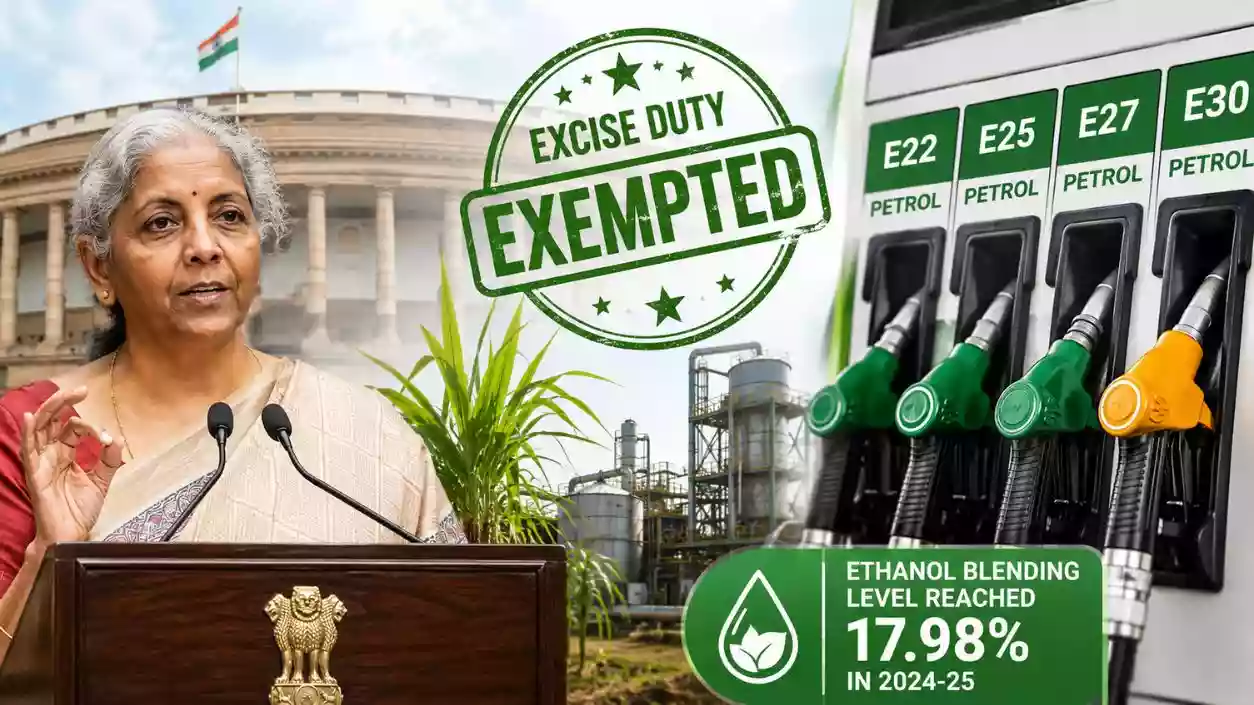
The central government has exempted petrol containing 22 per cent to 30 per cent ethanol from excise duty, extending tax support beyond the existing E20 fuel standard. The exemption covers higher ethanol blends including E22, E25, E27 and E30, marking a significant policy step as India continues to expand its ethanol blending programme to reduce dependence on imported crude oil and promote domestically produced fuel alternatives.
The move follows the recent notification of fuel-quality standards for higher ethanol blends by the Bureau of Indian Standards under IS 19850:2026, which came into effect on May 15, 2026. The standards define specifications relating to ethanol content, octane ratings, sulphur limits, testing procedures and safety requirements for fuels containing between 22 per cent and 30 per cent ethanol. Petroleum Ministry sources stated that no decision has yet been taken on the rollout of higher ethanol blends and that further testing and consultations will continue.
India's ethanol blending programme has recorded steady growth in recent years under the National Policy on Biofuels. Public sector oil marketing companies achieved 10 per cent ethanol blending in June 2022 ahead of schedule. Blending levels subsequently increased to 12.06 per cent in ESY 2022-23, 14.60 per cent in ESY 2023-24, and 17.98 per cent in ESY 2024-25 up to February 28, 2025. The government advanced its target of achieving 20 per cent ethanol blending from 2030 to Ethanol Supply Year 2025-26.
According to government officials, ethanol blending is intended to reduce crude oil imports, support domestic fuel production and create additional demand for agricultural feedstock. The policy has also been linked to efforts to lower emissions and strengthen energy security. The government has stated that increasing ethanol use helps retain fuel expenditure within the domestic economy while supporting farmers and rural sectors through expanded ethanol production.
The exemption comes shortly after the launch of E85 fuel, which contains 85 per cent ethanol and is designed for flex-fuel vehicles. The fuel has been introduced through selected public-sector fuel stations and is being sold at a lower price than E20 fuel. Concerns regarding vehicle compatibility and fuel efficiency have been raised during the expansion of ethanol blending, though the government and automobile industry bodies have maintained that the transition has been evaluated and implemented through established technical standards and regulatory processes.








 West Bengal
 Bihar
Bihar Uttar Pradesh
 Jharkhand