.gif)

Download Mobile App 







In a significant verdict nearly two decades after the devastating 2006 Mumbai train bombings, the Bombay High Court on Monday acquitted all 12 men who were previously convicted for the attacks that claimed 189 lives and injured over 800 people. The judgment, delivered by a division bench, highlighted serious flaws in the prosecution's case, marking a dramatic turn in one of India's deadliest terror attack investigations.
The division bench, comprising Justices Revati Mohite Dere and Gauri Godse, read out the operative part of the order, meticulously pointing out critical deficiencies in the prosecution’s evidence and procedures. Among the key observations, the court found that several key witnesses were unreliable, the identification parades conducted were questionable, and crucial confessional statements were allegedly extracted through torture, undermining the validity of the evidence presented.
"The defence had raised serious questions about the test identification parade. Many witnesses remained silent for unusually long periods, some over four years, and then suddenly identified the accused. This is abnormal," the bench noted, casting strong doubts on the credibility of the identification process that formed a cornerstone of the prosecution's arguments.
The judges also highlighted troubling inconsistencies in witness testimonies. The court specifically found that one witness had deposed in multiple unrelated crime branch cases, including the Ghatkopar blast case, which rendered his testimony highly 'unreliable' in the eyes of the court. Furthermore, several other witnesses failed to provide a convincing explanation for their sudden recall and identification of the accused after a lapse of many years, further weakening the prosecution's narrative.
Procedural lapses were also a significant focus of the High Court's observations. "Some witnesses were not even examined during the trial. As for recoveries like RDX and other explosive material, the prosecution could not establish that the evidence was sacrosanct until it reached the Forensic Science Laboratory," the bench stated, indicating a failure to maintain the chain of custody and integrity of crucial forensic evidence.
Observing "non-application of mind" on the part of the special Maharashtra Control of Organised Crime Act (MCOCA) court, the High Court unequivocally concluded that the prosecution had "thoroughly failed" to prove its case beyond reasonable doubt. "It is difficult to say that the prosecution can sustain its charges," the bench held, effectively quashing the MCOCA court's October 2015 judgment, which had previously sentenced five of the accused to death and seven to life imprisonment.











 West Bengal
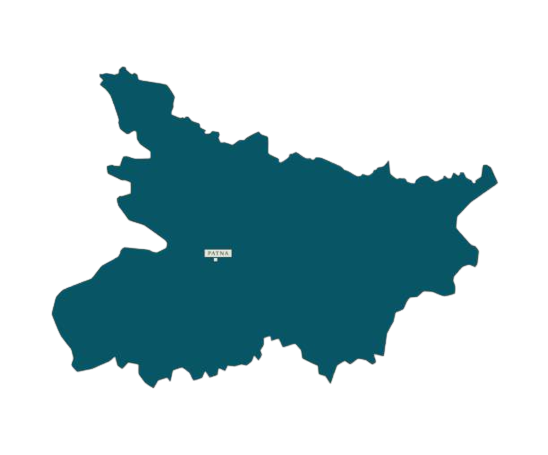 Bihar
Bihar Uttar Pradesh
 Jharkhand