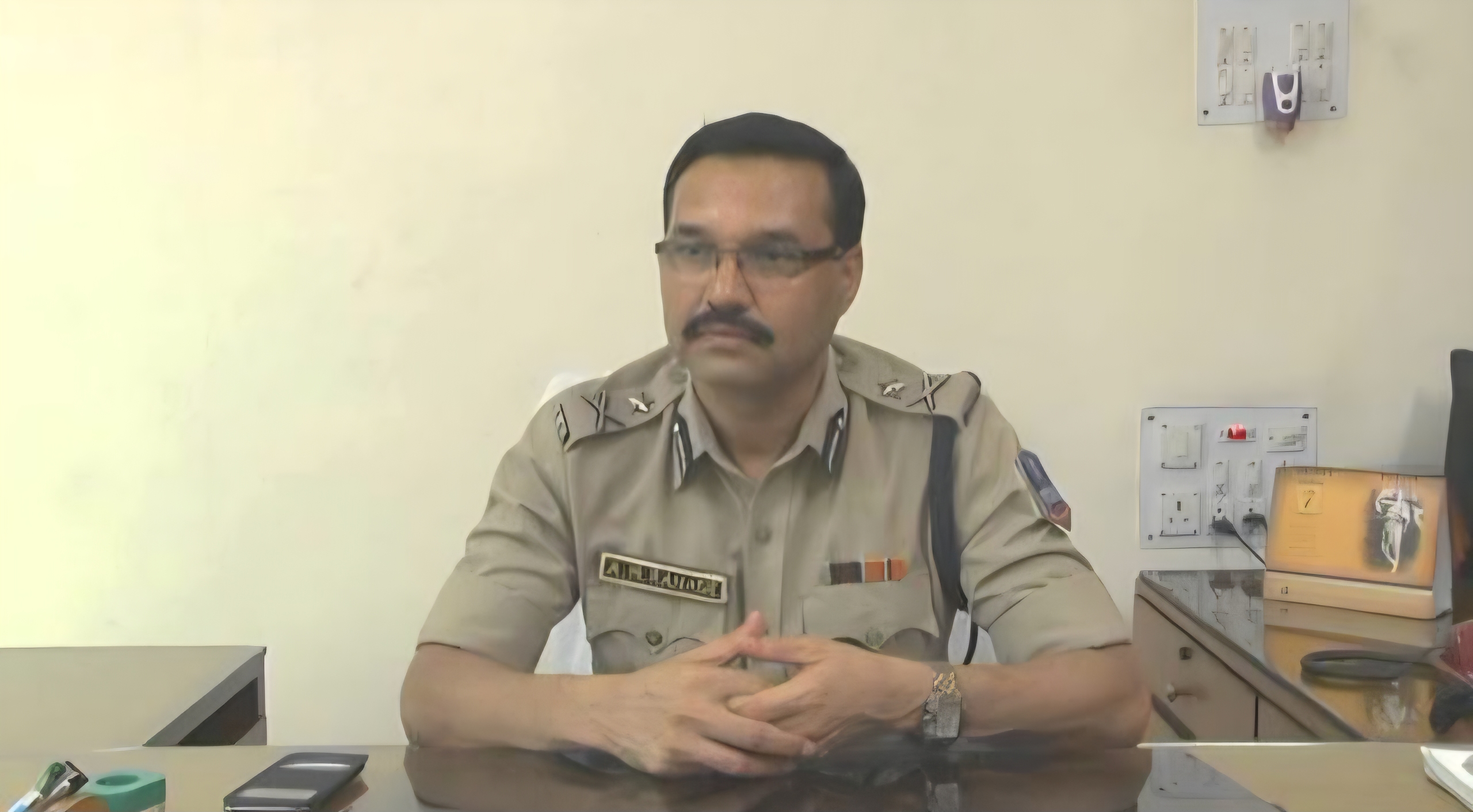
Bengal Govt elevates IPS Ajay Mukund Ranade to DGP (Law and Order)
.gif)

Download Mobile App 






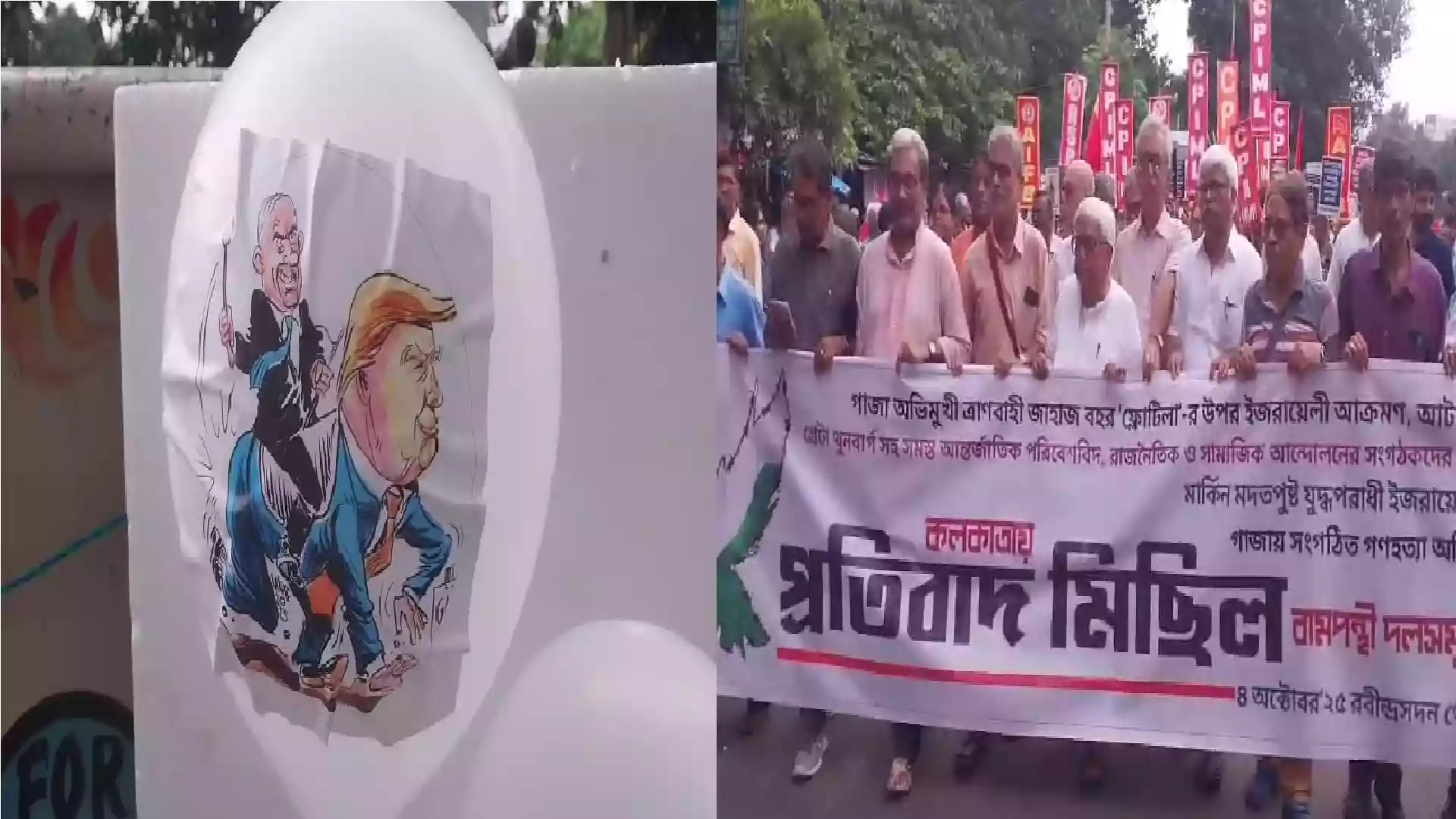
Under the overcast October skies of Kolkata, where the city's arteries pulse with the remnants of Durga Puja's fervor, a tide of crimson flags and clenched fists surged through the heart of the metropolis today, as the Communist Party of India (Marxist) or CIPM orchestrated a fiery protest march from Rabindra Sadan to the iconic Lenin statue at Dharmatala, channeling raw outrage over what they branded the "US-fueled genocide" ravaging Gaza and the Palestinian heartland. Drawing hundreds of activists—students from Jadavpur University clutching placards scrawled with "Free Palestine," aging comrades in faded red scarves, and families pushing strollers emblazoned with olive branches—this procession wasn't mere symbolism; it was a thunderous indictment of American complicity in Israel's relentless bombardment, which has claimed over 41,000 lives since October 2023, per UN tallies, turning the enclave into a graveyard of shattered homes and silenced dreams.
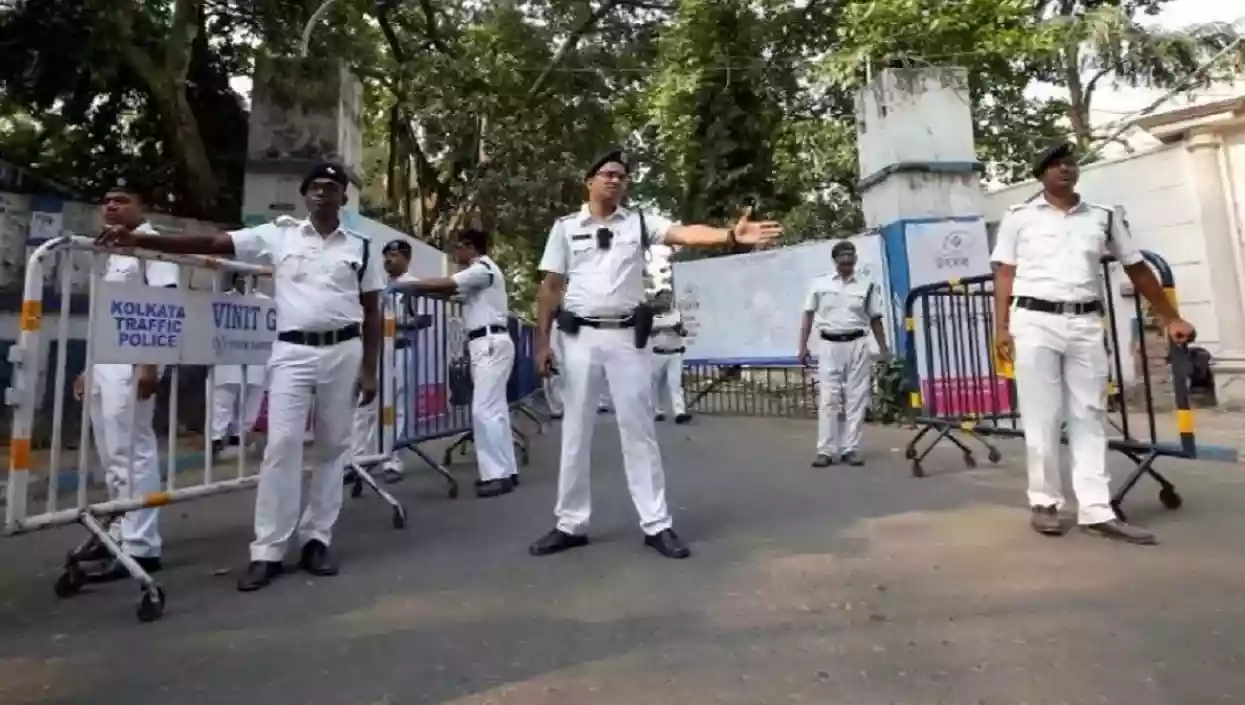
Led by CPM state secretary Mohd. Salim and veterans like Biman Bose, the rally echoed global calls for ceasefire and sanctions, weaving through Park Street's colonial shadows to Esplanade's revolutionary echo chamber, where speeches scorched the air with accusations of "imperialist bloodlust." In a nation where diplomatic tightropes bind ties to both Washington and Tel Aviv, this Kolkata uprising—peaceful yet unyielding, with chants of "Inquilab Zindabad" piercing the humid haze—stands as Bengal's defiant heartbeat, a reminder that in the City of Joy, solidarity with the oppressed runs deeper than the Hooghly's flow. As barriers of bamboo and blue-helmeted officers loomed, the marchers' resolve only swelled, transforming grief into a clarion for justice amid a conflict that mocks humanity's hollow vows.The procession ignited around late afternoon at Rabindra Sadan, the cultural citadel named for Tagore's universal humanism, a poignant launchpad for a cause that pits poetry against pulverized olive groves. Marchers, swelling to over 800 by estimates from party organizers, unfurled banners decrying "Biden's Bombs on Gaza", their footsteps syncing to the rhythmic thud of dhol-like protest drums borrowed from Puja processions.
Mohd. Salim, microphone in hand atop a flower-garlanded truck, kicked off with a searing oration: "America arms the executioners while Gaza's children pay with their lives—this is not war, it's extermination" Flanking him were young ideologues from SFI, the CPIM's student wing, who distributed leaflets detailing the blockade's toll: 1.9 million displaced, hospitals as rubble, famine's skeletal grip. The route, a 3-kilometer gauntlet past glitzy malls and faded facades, evoked Kolkata's layered soul—colonial ghosts whispering of old resistances, now reborn in solidarity with a people 5,000 kilometers away. Rain spat intermittently, but it only baptized the resolve, turning slick pavements into slides of slippery chants. Dharmatala's Lenin statue, that weathered sentinel of proletarian fire since 1990, loomed as the emotional apex, its bronze gaze seeming to nod approval at the throng converging beneath. Here, amid the traffic snarl and scent of street-side phuchka, the rally crested into a public forum, with speakers scaling makeshift podiums of stacked crates. Biman Bose, the veteran communist & left front chairman whose voice still carries the timbre invoking Lenin's anti-imperialist creed to frame Gaza as the front line of global class war.
This restraint, however, belied the undercurrent of tension: Whispers of TMC's sidelong glances, given the ruling party's own muted stance on Gaza amid its Israel trade ties. International echoes amplified the local roar—coordinated with Left fronts in Delhi's Jantar Mantar and Kerala's streets—part of a worldwide wave from London's Trafalgar to New York's Union Square, where Gaza's ghosts haunt the powerful. For Kolkata's Left, long eclipsed electorally but enduring in ethos, this march was reclamation: A bridge from Naxalbari's flames to Palestine's pyres, proving ideology's immortality in an age of algorithms and apathy. As the sun dipped toward the Ganges, dispersing the crowd into tram cars and yellow taxis, reflections lingered like incense smoke. One student marcher, eyes rimmed red from teargas dreams of distant kin, pocketed a keffiyeh-scarf memento: "Gaza's fight is ours—against borders that bleed." In the quiet aftermath, as Rabindra Sadan's lights flickered back to cultural soirées, the march's message etched deeper: Protest as poetry in motion, a refusal to let Gaza fade into footnotes. For CPM, it's more than optics—it's oxygen, fueling a revival where Lenin's legacy confronts live-streamed atrocities. As today's echoes fade into Monday's mills, one truth endures: In a world wired for indifference, Kolkata's streets remind us that solidarity isn't solidarity without the sweat of the march, the fire of the fist, the unyielding song for the silenced.




.webp)

.webp)

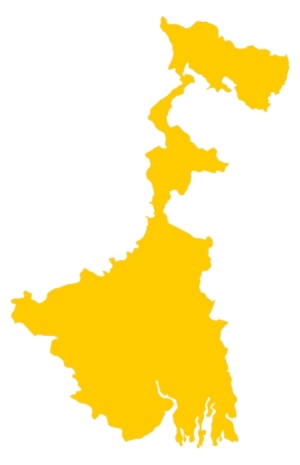 West Bengal
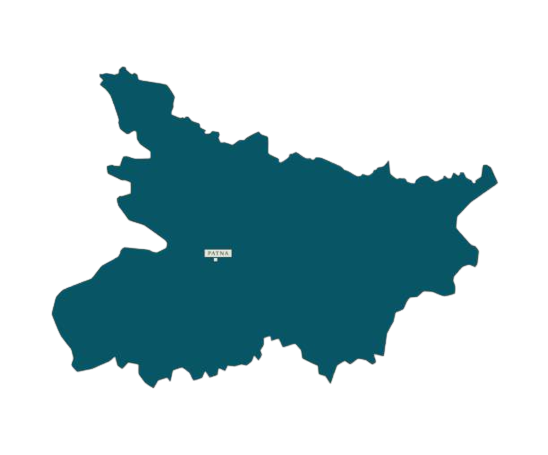 Bihar
Bihar Uttar Pradesh
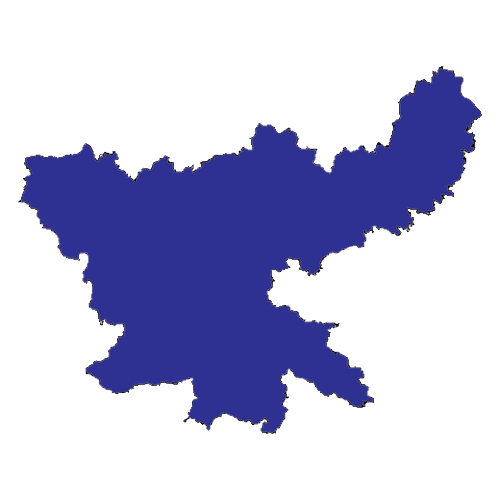 Jharkhand