.gif)

Download Mobile App 






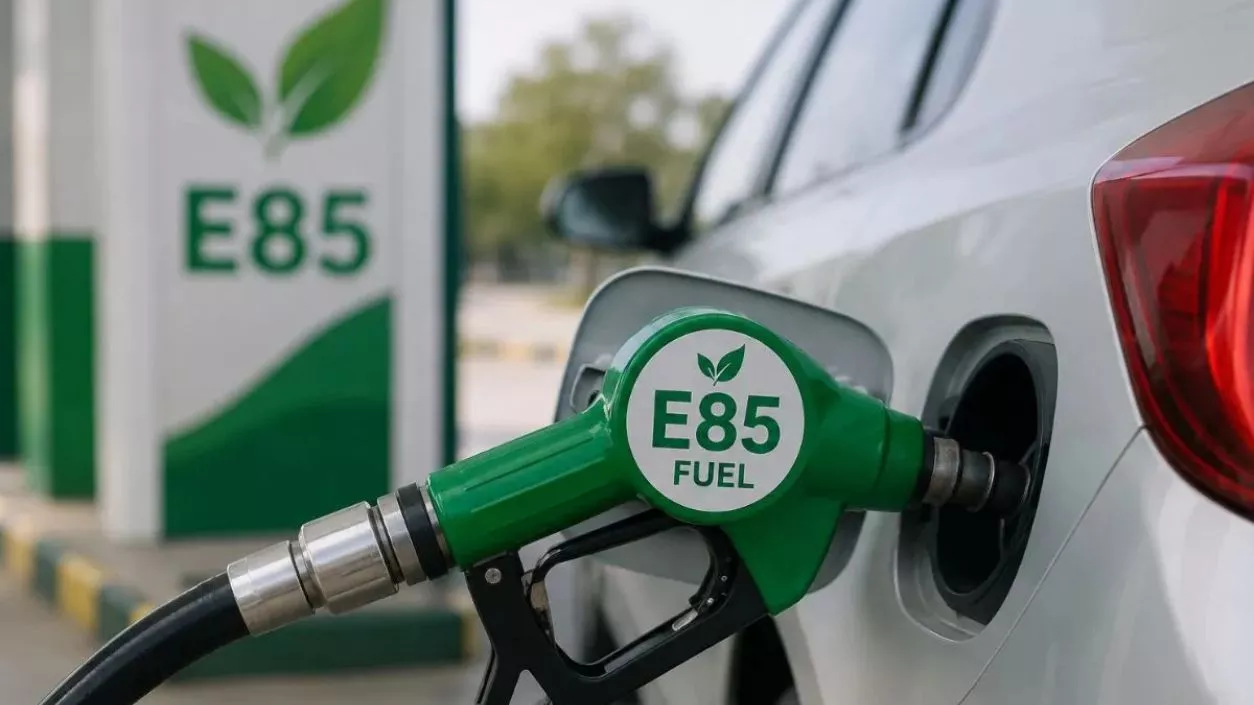
India has launched E85 flex fuel, marking the next phase of its ethanol-blending programme after the introduction of E20 petrol. Union Petroleum and Natural Gas Minister Hardeep Singh Puri launched the fuel at an Indian Oil outlet on Pusa Road in Delhi. E85 is currently available at 48 fuel stations across the country, including the Delhi outlet where the launch took place.
E85 fuel contains 85 per cent ethanol and 15 per cent petrol. In practical terms, one litre of E85 consists of 850 millilitres of ethanol and 150 millilitres of petrol. The fuel is intended exclusively for flex-fuel vehicles (FFVs) designed to operate on higher ethanol blends and cannot be used in conventional petrol vehicles. Recent flex-fuel vehicle launches in India include two motorcycles from Hero MotoCorp and a flex-fuel version of the Maruti Suzuki WagonR Flex Fuel.
In Delhi, E85 has been priced at ₹82.12 per litre, compared with ₹102.12 per litre for regular petrol. The government said the fuel offers a lower-cost alternative for compatible vehicles while supporting broader efforts to increase ethanol usage in the transport sector. Officials also stated that E85 can reduce greenhouse gas emissions by up to 61 per cent compared with conventional fuel.
The Petroleum Ministry has outlined a phased expansion plan for E85 availability. The fuel is expected to be sold at 500 fuel stations by December 2026 and at 5,000 fuel stations nationwide by December 2027. The rollout is aimed at encouraging greater adoption of flex-fuel vehicles, which can operate on ethanol blends ranging from E20 to E100.
According to government data, ethanol blending in petrol has increased from 1.53 per cent in 2014 to 20 per cent at present. The government stated that achieving the 20 per cent blending target ahead of schedule helped save more than ₹1.84 lakh crore in foreign exchange and offset around 302 lakh metric tonnes of crude oil imports. Officials expect the overall ethanol blending level in India to reach approximately 26 per cent by 2030–31 while supporting farmer incomes, rural economies and energy security.









 West Bengal
 Bihar
Bihar Uttar Pradesh
 Jharkhand