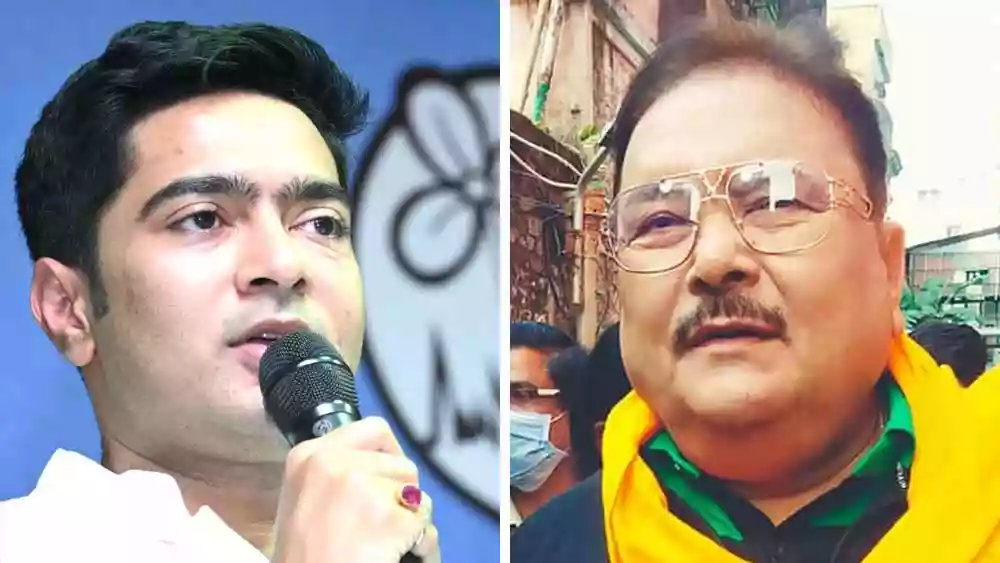
Abhishek slaps 10-crore defamation notice on Madan Mitra over 'murderer' jibe
.gif)

Download Mobile App 






The Calcutta High Court on Monday provided significant legal relief to Trinamool Congress (TMC) candidate Jahangir Khan by granting him interim protection from arrest until May 26. Presiding over an urgent session, Justice Saugata Bhattacharya directed state law enforcement agencies not to execute any coercive steps or punitive actions against the high-profile politician in connection with five pending First Information Reports (FIRs). The judicial intervention comes at a critical juncture, ensuring that the candidate can freely access his constituency for the final lap of electioneering just days before a crucial legislative re-poll.
During the high-voltage court hearing, senior advocate and former Advocate General Kishore Datta passionately argued that his client was being systematically victimized through a barrage of politically motivated cases. Highlighting a dramatic surge in litigation, Datta pointed out that local authorities had registered three separate criminal cases in a single day, some of which dug up old allegations dating back over nine years. Drawing a historic parallel, Khan’s defense team reminded the court that similar protective cushions were previously granted to Suvendu Adhikari during his tenure as an opposition leader when he faced a string of sudden state actions.
Representing the state, government counsels strongly opposed the protection plea, urging the single-judge bench to closely scrutinize the volatile events of the previous election day. The state alleged that Khan and his political loyalists were actively implicated in grave electoral malpractices, including widespread voter intimidation, booth capturing, and ballot paper tampering—unrest that ultimately forced the Election Commission to scrap the previous exercise. However, Justice Bhattacharya observed that India is a democratic nation where the spirit of fair representation must be rigorously upheld, deciding that a contesting candidate must be given an equal opportunity to participate in the democratic process.





 West Bengal
 Bihar
Bihar Uttar Pradesh
 Jharkhand