
Kalyan spotted speaking with Samik at Parliament; Mahua joins in too
.gif)

Download Mobile App 







A catastrophic and record-shattering heat wave sweeping across Europe has claimed at least 1,000 additional lives in France alone over a mere three-day window, according to data released by the national public health agency on Sunday. The grim announcement coincides with an urgent warning from the head of the World Health Organization (WHO), emphasizing that Europe has officially become the fastest-warming continent on the planet. As temperatures soared across major western territories, emergency networks scrambled to cope, wildfires broke out in parts of Germany, and Berlin police resorted to deploying heavy water cannons simply to cool down sweltering crowds in public areas.
The mortality rate in France spiked drastically during the absolute peak of the heat wave, showing an alarming surge in deaths inside private residences, particularly around the densely populated Paris region. Public Health France reported that daily fatalities reached over 1,200 on Wednesday before surging further to exceed 1,400 deaths on both Thursday and Friday—marking a stark contrast to the standard baseline of 900 to 1,000 daily deaths recorded in the preceding spring months. Health officials stressed that about 85 percent of the victims were senior citizens aged 65 and above, with the sharpest mortality curves aligning perfectly with regions placed under critical red weather alerts.
As the severe weather system slowly migrates toward eastern Europe, all-time temperature records are actively tumbling across the continent. Germany shattered its historical baseline for the third consecutive day, logging an unprecedented 41.7 degrees Celsius (107 degrees Fahrenheit) in Neißemünde, right along the Polish border. Simultaneously, the Czech Republic experienced its hottest day in recorded history, with the mercury hitting a staggering 41.1 degrees Celsius (106.4 degrees Fahrenheit), leaving local agricultural sectors and power grids under immense structural strain.
A rapid scientific analysis published on Friday by the World Weather Attribution network concluded that this level of extreme heat and suffocating humidity would have been virtually impossible just fifty years ago. According to environmental scientists, human-driven climate change has made such severe thermal anomalies roughly 200 times more likely to occur today than just two decades ago. With a red alert blanket covering nearly three-quarters of France at its peak, global health administrators are demanding immediate, systemic infrastructure changes to safeguard vulnerable urban populations from increasingly frequent weather extremes.




.webp)

.webp)

.webp)


 West Bengal
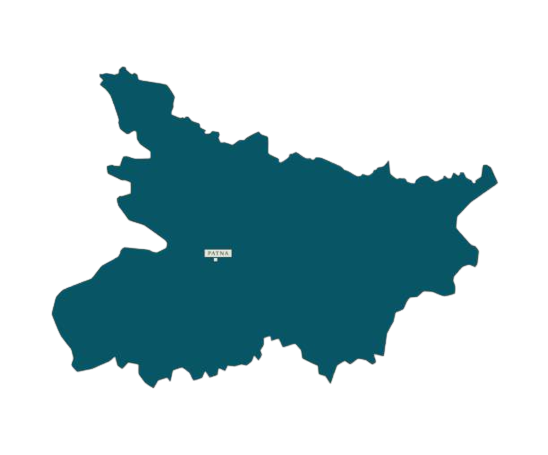 Bihar
Bihar Uttar Pradesh
 Jharkhand