.webp)
"Kolkata to get Water Metro connectivity," says Chief Minister Suvendu Adhikari
.gif)

Download Mobile App 






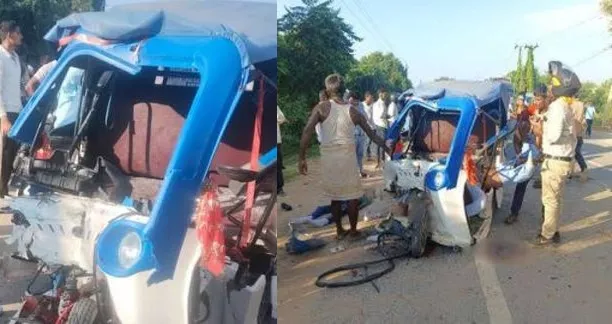
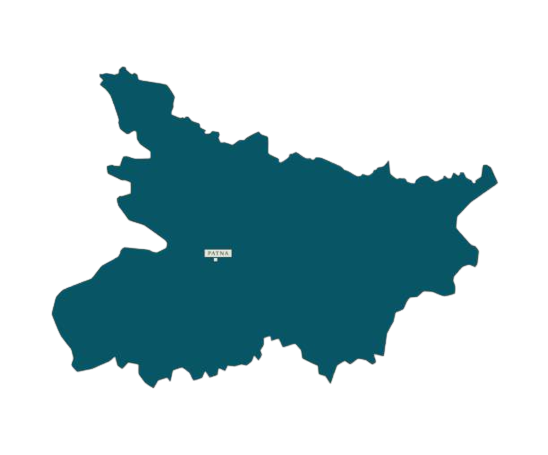
Today, the Tilouthu-Dehri National Highway in Bihar's Rohtas district turned into a scene of unimaginable devastation. A heavily loaded truck, barreling down the road at breakneck speed, collided head-on with a crowded auto-rickshaw packed with commuters, leaving four souls lifeless at the spot and one fighter clinging to survival in a haze of twisted metal and shattered glass. Eyewitnesses described a thunderous impact that echoed like a bomb, hurling the auto into a mangled heap while the truck veered wildly, sparking fears of a larger inferno. This heartbreaking collision—a stretch notorious for its blind curves and reckless drivers—has once again exposed the perilous underbelly of India's bustling roadways, where lives hang by the thread of fleeting caution.
The victims, all locals from nearby villages, were ordinary folks starting their day with the simple hope of reaching work or home intact. Among them was Ramu Yadav, a 45-year-old daily wage labourer known for his infectious smile and tireless support for his three children, who now face a future shrouded in uncertainty. Beside him sat his neighbor, Sita Devi, a 38-year-old homemaker heading to the market. The other two fatalities included young brothers Rajesh and Manoj Kumar, both in their early 20s, who were used to work at a local garage, their youthful ambitions reduced to echoes in the wreckage.
The sole survivor, an elderly man named Hari Lal, suffered severe fractures and internal injuries; he was rushed to Dehri's primary hospital where doctors battled to stabilize him amid frantic beeps and the scent of antiseptic. Preliminary probes suggest the truck driver, possibly fatigued from an overnight haul, lost control on a slick patch of road, but locals whisper of chronic overspeeding as the true culprit in this fatal dance.
Emergency responders arrived within minutes, their sirens, only to confront a tableau of sorrow that tested even their hardened resolve. Fire tenders doused potential flames from the truck's leaking fuel tank, while police cordoned off the site, sifting through debris for clues under the rising sun. The auto, a lifeline for many in these rural pockets, lay crumpled like a discarded toy, its vibrant yellow frame now a grim reminder of vulnerability. Rescue teams worked methodically, extracting the injured with utmost care. As bodies were gently covered and transported, the locals gathered in hushed clusters.
Rohtas, a district of Bihar pulsing with the rhythm of agriculture and small-scale trade, has long grappled with the shadow of road fatalities, its highways serving as vital veins connecting remote hamlets to urban hubs.
In the wake of the crash, district authorities swiftly dispatched a team to investigate, promising stricter patrols and perhaps even speed breakers at high-risk bends. Yet, for families like Ramu's, such pledges ring hollow amid the immediate void left by loss.
As time passes, painting the highway in harsh light, the focus shifted to healing the wounds both visible and unseen. Hari Lal, the lone survivor, underwent emergency surgery, his family huddled in the hospital corridor, clinging to whispers of hope from overworked staff. The truck driver, who escaped with minor bruises, was taken into custody for questioning, his vehicle impounded as forensic experts comb the scene for tire marks and black box data.
Beyond the immediate chaos, this tragedy reignites a conversation on road safety in India, where thousands perish annually on unforgiving asphalt. As night falls, the highway hums on, indifferent to the lives it claims, but the memory of those four—Ramu, Sita, Rajesh, and Manoj—fuels a quiet resolve.







 West Bengal
 Bihar
Bihar Uttar Pradesh
 Jharkhand