
Kalyan spotted speaking with Samik at Parliament; Mahua joins in too
.gif)

Download Mobile App 






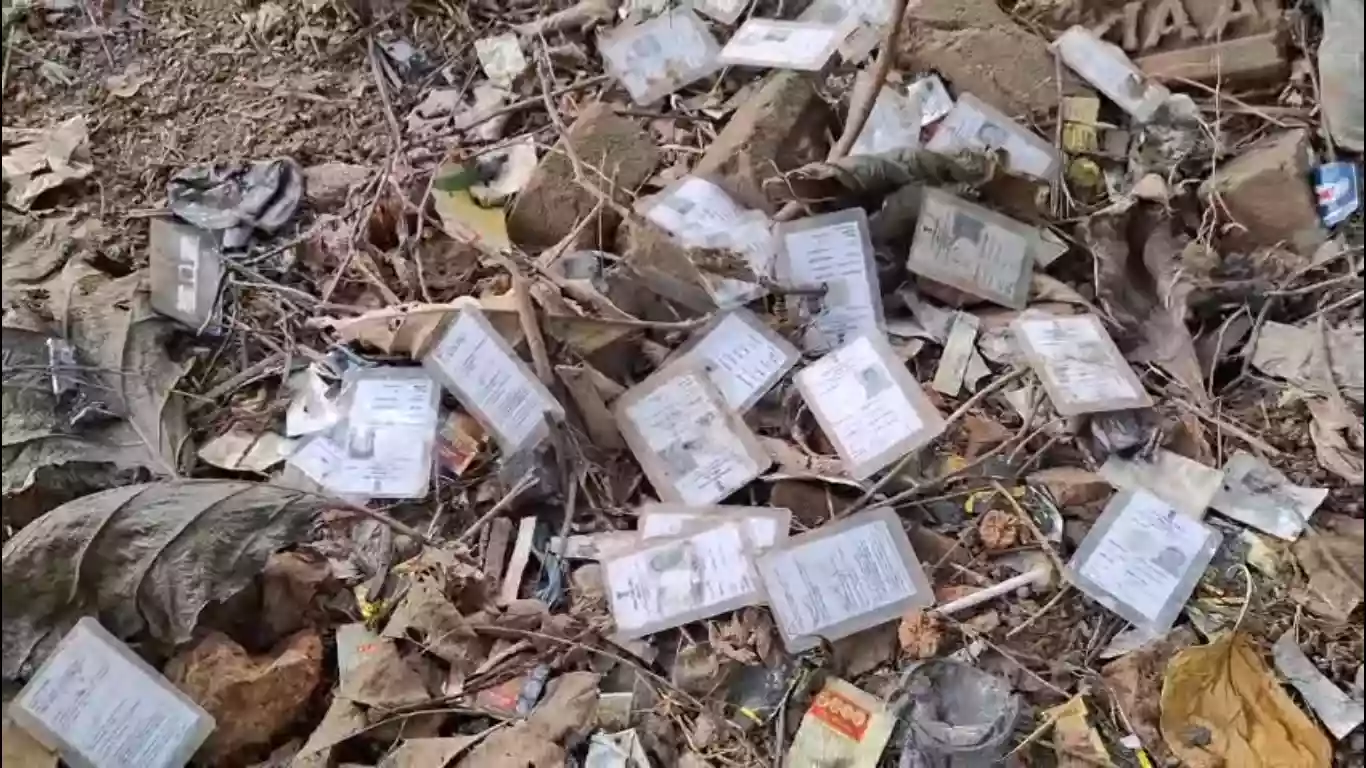
In a startling revelation that's raising eyebrows about electoral integrity in West Bengal's industrial heartland, a large pile of voter ID cards was discovered discarded in a garbage heap beneath a tree in the dense Lahat jungle area under the Salanpur police station jurisdiction of Asansol. Local residents, out for a routine walk on today, stumbled upon the suspicious bundle amid the underbrush and immediately alerted authorities, suspecting foul play involving counterfeit documents. Preliminary checks reveal that all the cards bear addresses from the nearby Chittaranjan locality, a bustling railway town known for its locomotive works and diverse population.
The find has sparked immediate concerns over potential voter fraud, especially as the state gears up for ongoing electoral roll revisions like the Special Intensive Revision (SIR), where bogus entries could sway local polls. Police swiftly cordoned off the site, collected the cards for forensic analysis, and launched a probe to trace their origin—whether they're genuine discards from a cleanup drive or deliberate fakes meant to manipulate votes. This incident echoes past scandals of dumped IDs across India, underscoring the vulnerabilities in voter registration processes amid rising political tensions in Asansol, a Trinamool-BJP battleground.
The discovery unfolded in the early hours when a group of villagers from Lahat, a remote hamlet in the Salanpur block, noticed what looked like colorful plastic cards peeking out from a mound of trash and leaves under a sprawling banyan tree. "We thought it was just litter at first, but when we got closer, we saw they were voter cards—hundreds of them, all jumbled together," recounted one eyewitness, a local farmer who preferred anonymity. The cards, laminated and seemingly official at a glance, featured photos of individuals mostly from Chittaranjan's residential areas, including names that rang familiar to some residents.
Fearing they might be forged to create ghost voters—a common tactic in high-stakes elections—the group wasted no time in contacting the Salanpur police station, just a few kilometers away. By midday, officers arrived, donning gloves to sift through the debris, bagging the evidence, and transporting it to the station for scrutiny. No arrests have been made yet, but the police have registered a case under relevant sections for tampering with official documents.Asansol, with its mix of coal mines, factories, and migrant workers, has long been a hotspot for electoral controversies, from booth capturing allegations to disputes over voter lists. Chittaranjan, located about 20 kilometers from Asansol's core, is home to over 50,000 residents, many employed at the iconic Chittaranjan Locomotive Works, and its voter base is crucial in Paschim Bardhaman district polls.
The addresses on the cards point to specific wards in Chittaranjan, suggesting a targeted dump rather than random litter. Officials suspect the perpetrator might have fled after realizing the cards could be traced, possibly using the nearby railway lines for a quick escape. "We're verifying each card against the electoral database; if they're fakes, it could indicate a larger racket," said a senior police officer involved in the investigation, adding that fingerprints and CCTV footage from surrounding areas are being reviewed. The Election Commission has been informed, as this could tie into broader concerns over the SIR process, which aims to clean up rolls but has faced accusations of politicization.Local reactions have been a mix of outrage and worry, with residents gathering at the police station to demand swift action. "How can we trust our democracy if IDs are being thrown away like this? It makes you wonder who's pulling the strings," voiced a young shopkeeper.
Meanwhile, environmental activists in the region are using the event to highlight the growing problem of illegal dumping in jungle fringes, where urban waste encroaches on green spaces, posing risks to wildlife and water sources.The probe's early findings could unravel a web of irregularities, especially if the cards are linked to previous complaints of duplicate entries in Asansol's rolls. Forensic experts will examine the print quality, holograms, and ink to determine authenticity, while cyber teams check for digital trails in registration data. If confirmed as fakes, this could lead to raids on printing dens or political operatives, similar to busts in other states. For now, the dumped cards serve as a stark reminder of the shadows lurking in India's vibrant democracy, where every vote counts but not every ID is what it seems. Authorities urge the public to report any suspicious activity, emphasizing that such discoveries are vital for safeguarding electoral fairness.As the sun set over the Lahat jungle, the once-overlooked garbage heap had transformed into a symbol of civic alertness, with police patrols increased in the area. This Asansol episode not only tests local law enforcement but also reignites national debates on voter verification tech, like Aadhaar linkage and biometric checks, to prevent future dumps. In a constituency where elections often hinge on narrow margins, the timely find might just prevent a larger fraud, restoring a bit of faith in the system for the everyday citizens of Salanpur and Chittaranjan.




.webp)



 West Bengal
 Bihar
Bihar Uttar Pradesh
 Jharkhand