
Court sends Councilor Mahesh Sharma to 6-day police custody in extortion case
.gif)

Download Mobile App 






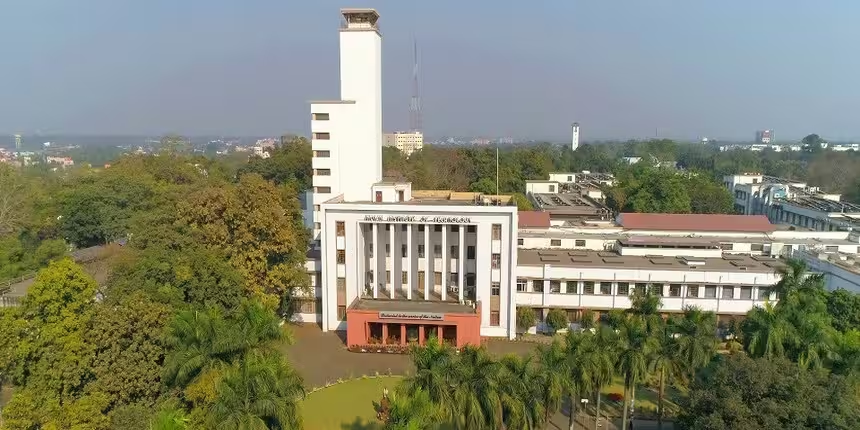
Kolkata’s academic powerhouses, Jadavpur University (JU) and the Indian Institute of Technology Kharagpur (IIT KGP), have once again proven their mettle in the National Institutional Ranking Framework (NIRF) 2024, securing impressive positions among India’s top educational institutions. Released on August 12, 2024, by the Ministry of Education, the NIRF rankings highlight the consistent excellence of these institutions in categories like engineering, overall performance, and research. JU, a state public university, and IIT KGP, a premier technical institute, have cemented their reputations as leaders in academics, research, and innovation, drawing attention from students and educators nationwide. Their achievements reflect Kolkata’s growing stature as a hub for world-class education.Jadavpur University has shown remarkable performance despite a slight dip in some categories.
In the NIRF 2024 rankings, JU secured the 17th position in the 'Overall' category, down from 13th in 2023, and 9th in the 'University' category, a drop of five ranks. However, its engineering programs remain a highlight, ranking 12th nationally, though it slipped two spots from last year. JU’s strengths lie in its teaching quality, graduation success rates, and inclusive learning environment. The university also maintained a stable rank of 18th in the 'Pharmacy' category, showcasing its diverse academic offerings. These rankings underscore JU’s commitment to holistic education, even as it navigates competitive challenges.
IIT Kharagpur, a beacon of technical education since its inception in 1951, continues to dominate the NIRF rankings. It clinched the 5th spot in the 'Engineering' category and 6th in the 'Overall' category in 2024, reaffirming its status as one of India’s top institutes. Beyond engineering, IIT KGP excelled in law (7th rank) and management (19th rank), reflecting its diversified academic portfolio. The institute’s high scores in research output, faculty-student ratio, and employer reputation have made it a dream destination for engineering aspirants. Its sprawling 2,100-acre campus and global collaborations further enhance its appeal.
Both institutions have also made strides in global rankings, adding to their prestige. In the QS World University Rankings for Asia 2025, IIT Kharagpur secured the 60th position, while JU ranked 211th, improving by 17 spots from the previous year. These rankings evaluate factors like academic reputation, research impact, and international networks, where both institutes have shown significant progress. JU’s climb in the Asian rankings highlights its growing global influence, while IIT KGP’s consistent performance places it among Asia’s elite institutions. This international recognition complements their NIRF success, showcasing their ability to compete on a global stage.
The success of JU and IIT KGP is not just about numbers but also about their impact on students and society. Jadavpur University’s placement cell has achieved a 94% placement rate for its Computer Science and Engineering (CSE) branch, with a record-breaking offer of Rs 1.8 crore per annum in 2023. Similarly, IIT KGP’s graduates are highly sought after, with top companies offering salaries up to Rs 19.50 lakh per annum. Both institutions provide robust support through scholarships, internships, and skill-development programs, ensuring students are well-prepared for global careers. Their focus on affordability, with JU’s BTech fees as low as Rs 2,400–9,600 per year, makes quality education accessible.
Looking ahead, both JU and IIT KGP face the challenge of maintaining their rankings amidst growing competition. JU’s slight decline in rankings could be attributed to the strong performance of other institutes, but its improvements in peer perception and teaching resources are promising. IIT KGP, under the leadership of its new director, Suman Chakraborty, a JU alumnus, aims to address campus challenges like accommodation and student well-being while enhancing its global reputation. As these institutions continue to innovate and inspire, they remain pillars of academic excellence, shaping the future of education in India and beyond.

.webp)







 West Bengal
 Bihar
Bihar Uttar Pradesh
 Jharkhand