.webp)
'No hawker eviction this month', orders Calcutta HC in Raliway land encroachment case
.gif)

Download Mobile App 






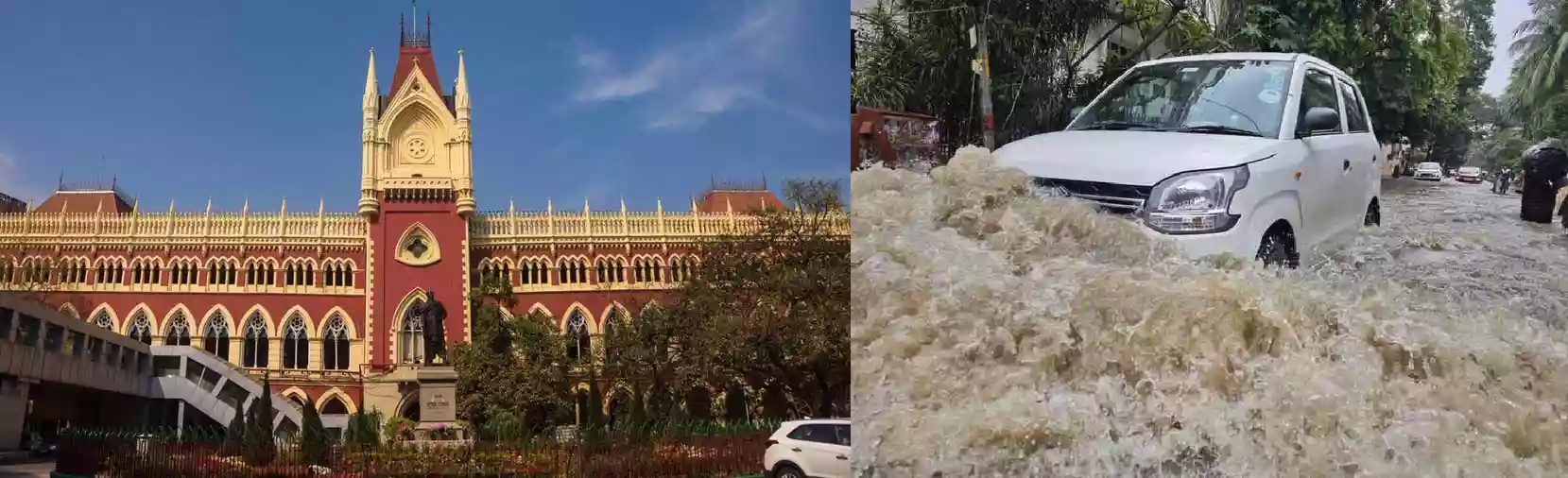
In the wake of Kolkata's biblical downpour that submerged streets and stalled the city's pulse, the Calcutta High Court transformed into a ghost of its usual bustling self on today, with hearings largely abandoned due to absentee lawyers, staff, and even judges navigating waist-deep floods. Overnight rains exceeding 250 mm—the heaviest in 39 years—turned arterial roads into impassable rivers, leaving court officers and advocates stranded at home, while only a handful braved the torrent to reach the iconic building by 10:30 a.m.
Acting Chief Justice Soumen Sen bucked the trend by conducting a few urgent matters, but by midday, the exodus was complete: empty benches, silent corridors, and a day's docket effectively washed away, echoing the broader paralysis gripping schools, the U.S. Consulate, and public transport across West Bengal's capital.
The deluge's grip was unrelenting, with low-lying areas like Esplanade and Strand Road—mere blocks from the High Court—awash in murky waters that lapped at doorsteps and swallowed vehicles whole. Eyewitnesses recounted lawyers in waders or bare feet sloshing through knee-deep pools, only to find their cases postponed indefinitely as benches remained unstaffed. From the registry to the appellate halls, the scene was uniformly desolate: missing court officers meant no case files in place, no calls for arguments, and judges retreating without a murmur. This wasn't mere inconvenience; it was a stark illustration of how nature's fury can halt the wheels of justice, especially in a monsoon season amplified by climate whims, leaving litigants from across the state in limbo just as Durga Puja preparations teeter on the brink.
Acting Chief Justice Sen's solo stand provided a flicker of continuity amid the chaos. In his chamber, he powered through select writ petitions and urgent bail applications where both sides miraculously mustered representation, underscoring the court's commitment to the most pressing dockets. "Justice delayed is justice denied," he reportedly quipped to a sparse gallery, blending resolve with wry acknowledgment of the absurdity. Yet, even his efforts couldn't mask the systemic snag: without advocates to plead or staff to facilitate, the machinery sputtered. By noon, as the sun teased a brief emergence, a few judges ventured back, only to face the same void—lawyers still en route or hunkered down, their Bar associations firing off pleas to suspend all but the bare essentials.
The legal fraternity's response was swift and synchronized. Three prominent lawyers' organizations—the Calcutta High Court Bar Association, the Advocates' Forum, and the Incorporated Law Society—penned an urgent missive to Justice Sen, imploring a selective approach: Proceed only with matters where all parties' counsel were present, but crucially, refrain from delisting any case from the roster. This pragmatic pitch resonated; court insiders confirmed the judges' nod, ensuring no permanent backlog from the "flood day." It was a nod to equity in extremis, recognizing that while the rain spared no one, the pursuit of fair hearings demanded flexibility. For many young advocates commuting from distant suburbs, the ordeal highlighted inequities—those with cars fared better than the scooter-riding majority, wading through hazards that claimed lives elsewhere in the city.
As afternoon wore on, the High Court's grand facade stood defiant yet diminished, its marble halls echoing with the drip of leaky roofs rather than the cadence of debate. Outside, the ripple effects compounded: Metro lines flooded, flights grounded (over 30 cancellations), and trains crawling at snail's pace, stranding thousands who might have otherwise fueled the court's daily rhythm. Chief Minister Mamata Banerjee's administration, already reeling from a death toll nearing eight, extended Puja holidays early for schools, a move that indirectly eased some pressure but did little for the judicial throttle. Judges, too, weren't immune—several cited family safety concerns, their robes traded for rain gear in a rare concession to the elements.
This watery interlude at the High Court isn't isolated; it's a microcosm of Kolkata's perennial monsoon vulnerabilities, where outdated drains meet intensifying storms. As waters begin to ebb by late Tuesday, whispers of virtual hearings gain traction— a digital lifeline piloted post-pandemic but underutilized in routine. For now, the gavel's silence serves as a sobering reminder: Even pillars of democracy bow to the skies. With IMD forecasting scattered showers through the week, the court gears up for a backlog blitz, but today's shutdown will linger in lore—a day when justice, like the city, simply floated away.


.webp)
.webp)
.webp)

 West Bengal
 Bihar
Bihar Uttar Pradesh
 Jharkhand