
Abhishek slaps 10-crore defamation notice on Madan Mitra over 'murderer' jibe
.gif)

Download Mobile App 






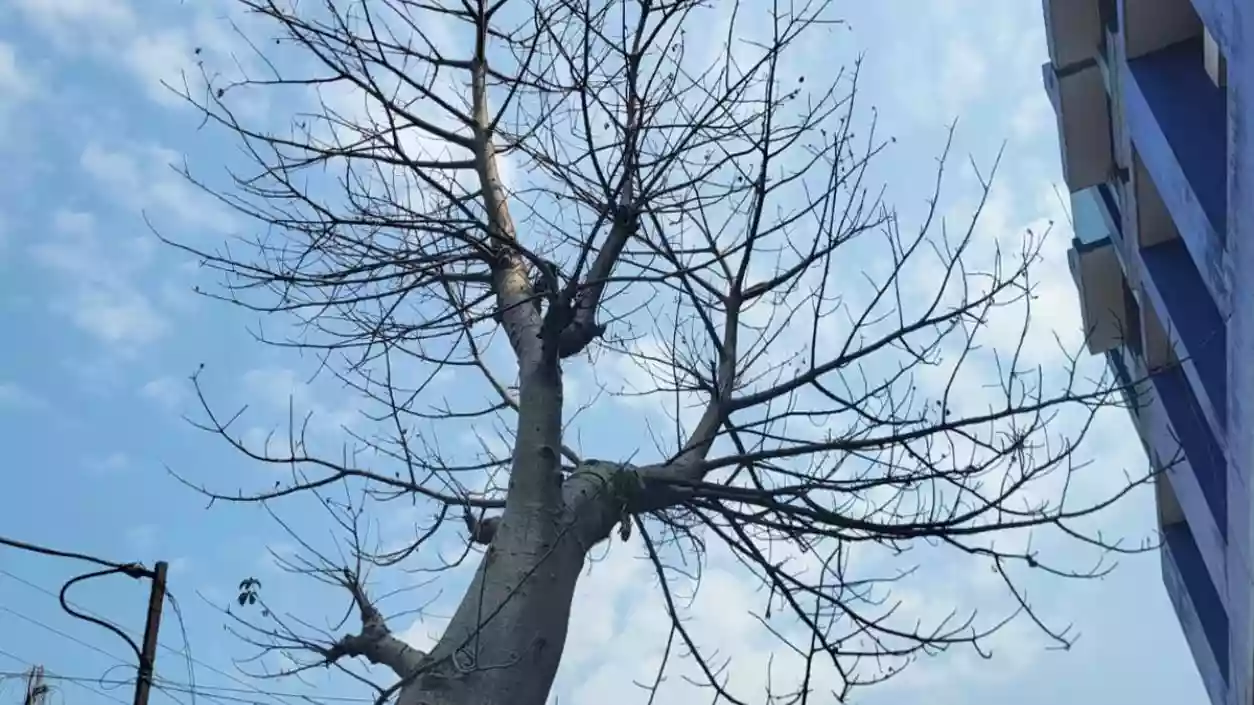
A towering, pot-bellied tree resembling an “upside-down tree” has sparked widespread curiosity in Bardhaman, with experts suspecting it could be the rare African baobab. The unusual tree, growing unattended beside an ATM wall in front of the District Magistrate’s office, has drawn the attention of the Botany Department and the Forest Department, who are now set to inspect the site to confirm its species and ensure conservation measures if required.
From photographs, experts initially believe the tree may be the African baobab, scientifically known as Adansonia digitata. However, officials have stressed that visual assessment alone is insufficient. Forest Department specialists are expected to conduct an on-the-spot examination before any final confirmation is made.
The tree has already grown taller than a three-storey building, with a thick trunk and a strikingly unusual form. Unlike common trees, it appears inverted — as if its roots have split and stretched upward while the trunk has sunk underground. In winter, the tree sheds its leaves, making identification through photographs more difficult.
Professor Joyprakash Keshari of the Botany Department at Bardhaman University noted that African baobabs are known for their distinctive upside-down appearance. While similar trees have been planted within the university campus, he observed that the specimen near the District Magistrate’s office appears to have grown naturally. Forest officials, however, said there is no prior record of African baobabs growing naturally in the area.
Baobab trees are known for their longevity, often surviving for over 1,000 years, and their massive trunks that store water in arid climates. In West Bengal, such trees are preserved at the Acharya Jagadish Chandra Bose Indian Botanic Garden in Shibpur, and some are found in parts of Madhya Pradesh and Maharashtra. With experts now moving to verify its identity, the Bardhaman tree may soon join the list of protected botanical rarities if confirmed.







 West Bengal
 Bihar
Bihar Uttar Pradesh
 Jharkhand