
Abhishek slaps 10-crore defamation notice on Madan Mitra over 'murderer' jibe
.gif)

Download Mobile App 






.webp)
The National Council of Educational Research and Training (NCERT) has launched two special modules titled “India: A Rising Space Power”, chronicling India’s transformation from launching rockets on bicycles in the 1960s to achieving global recognition with missions such as Chandrayaan-3, Mangalyaan and Aditya-L1.
The modules, designed for middle and secondary school students, use photographs, diagrams and timelines to illustrate milestones in India’s space journey. They trace the growth of the Indian National Committee for Space Research (INCOSPAR), founded in 1962 under Vikram Sarabhai, into the Indian Space Research Organisation (ISRO), which has since executed 131 spacecraft missions and 101 launch missions, including the deployment of over 430 foreign satellites for 35 nations.
The content highlights landmark achievements — Aryabhata (1975), India’s first satellite; SITE experiment that brought television to villages; Chandrayaan-1’s discovery of lunar water molecules; Mangalyaan’s 2013 success on Mars in the maiden attempt; Chandrayaan-3’s historic south pole landing in 2023; and Aditya-L1’s solar studies. It also covers astronauts Rakesh Sharma (1984) and Group Captain Shubhanshu Shukla (2025), India’s first ISS resident.
Future projects receive focus as well, including Gaganyaan’s planned three-member crewed mission, Chandrayaan-4’s lunar sample return, the NASA-ISRO NISAR satellite, and the Bharatiya Antariksh Station (BAS), India’s approved independent space station for long-duration missions and microgravity research. The modules also emphasise India’s emergence as a global service provider in satellite launches and its target to capture 8% of the global space economy by 2035, with over 200 space startups contributing.






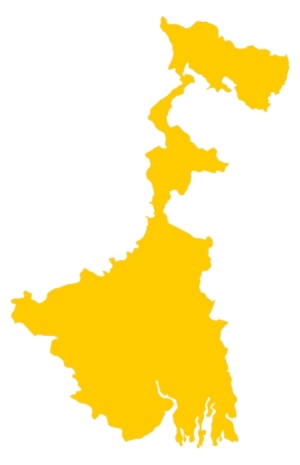 West Bengal
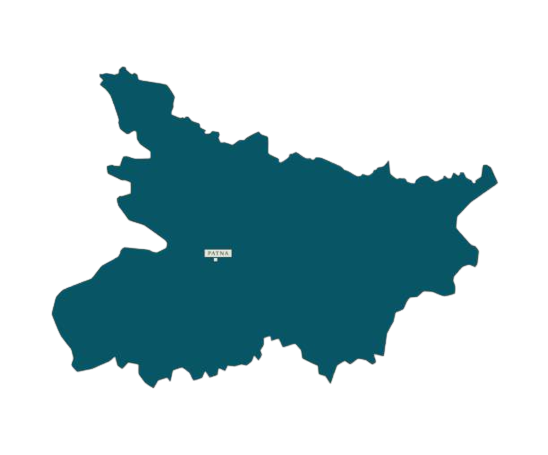 Bihar
Bihar Uttar Pradesh
 Jharkhand