
West Indies cricket legend Gary Sobers passes away; was first to smash 6 sixes in 6 balls
.gif)

Download Mobile App 






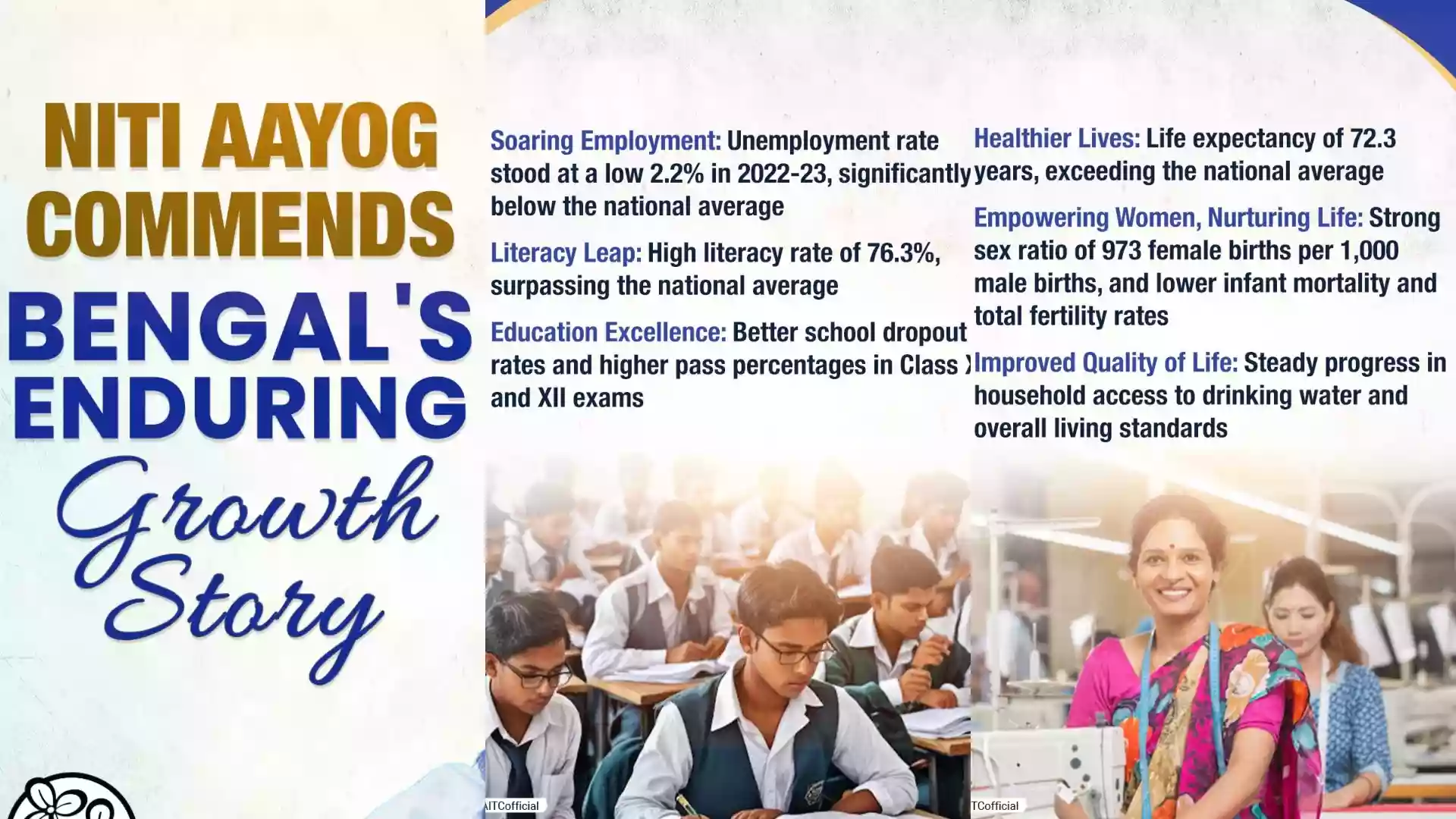
The NITI Aayog has reportedly commended West Bengal's enduring growth story, with its latest report highlighting the state's strong performance across critical indicators such as employment, education, healthcare, and overall quality of life. This recognition comes as a significant boost for the Trinamool Congress (TMC) government, which attributes these achievements to the inclusive policies and people-centric governance under the leadership of Chief Minister Mamata Banerjee. The party emphasized that "Bengal Shows The Way," showcasing the state's progress on various fronts that surpass national averages in several key metrics.
According to the details shared by the TMC, the NITI Aayog report indicates a "Soaring Employment" rate, with West Bengal's unemployment standing at a low 2.2% in 2022-23. This figure is significantly below the national average, suggesting effective job creation and economic stability within the state. Such a low unemployment rate is a crucial indicator of a healthy economy and successful government policies aimed at empowering its workforce.
In the realm of education, the report points to a "Literacy Leap" for Bengal, boasting a high literacy rate of 76.3%. This rate not only demonstrates considerable educational advancement but also significantly surpasses the national average, showcasing the state's commitment to improving access to and quality of education for its citizens. This higher literacy rate is a foundational element for broader societal development.
Furthermore, the state has shown "Education Excellence" through better school dropout rates and higher pass percentages in both Class X and Class XII examinations. These improved metrics suggest that educational reforms and initiatives in West Bengal are yielding positive results, ensuring more students complete their schooling and achieve academic success, thereby building a stronger human capital base for the future.
The report also highlights "Healthier Lives" in West Bengal, with the life expectancy reaching 72.3 years, exceeding the national average. This indicates substantial improvements in healthcare infrastructure, public health programs, and overall living conditions that contribute to a longer and healthier life for the state's population. This extended life expectancy is a testament to effective health policies.
Beyond health, the NITI Aayog report acknowledges West Bengal's efforts in "Empowering Women, Nurturing Life." The state has achieved a strong sex ratio of 973 female births per 1,000 male births, coupled with lower infant mortality rates and total fertility rates. These statistics reflect significant advancements in maternal and child healthcare, gender equality, and family planning initiatives, underscoring the state's commitment to the well-being of women and children. Additionally, there has been "Improved Quality of Life," marked by steady progress in household access to drinking water and overall living standards.





.webp)
.webp)
.webp)
.webp)
.webp)

 West Bengal
 Bihar
Bihar Uttar Pradesh
 Jharkhand