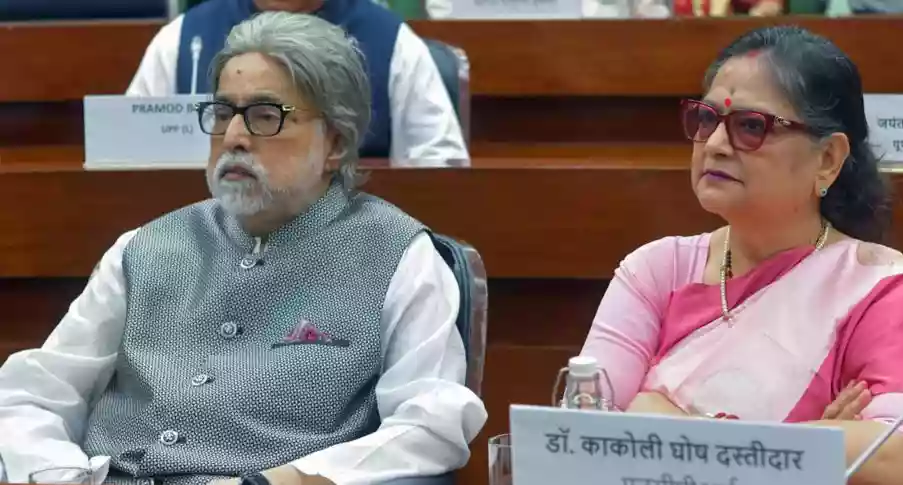
"Smaller parties shouldn't be prioritized": Sudip Bandyopadhyay hits at TMC
.gif)

Download Mobile App 






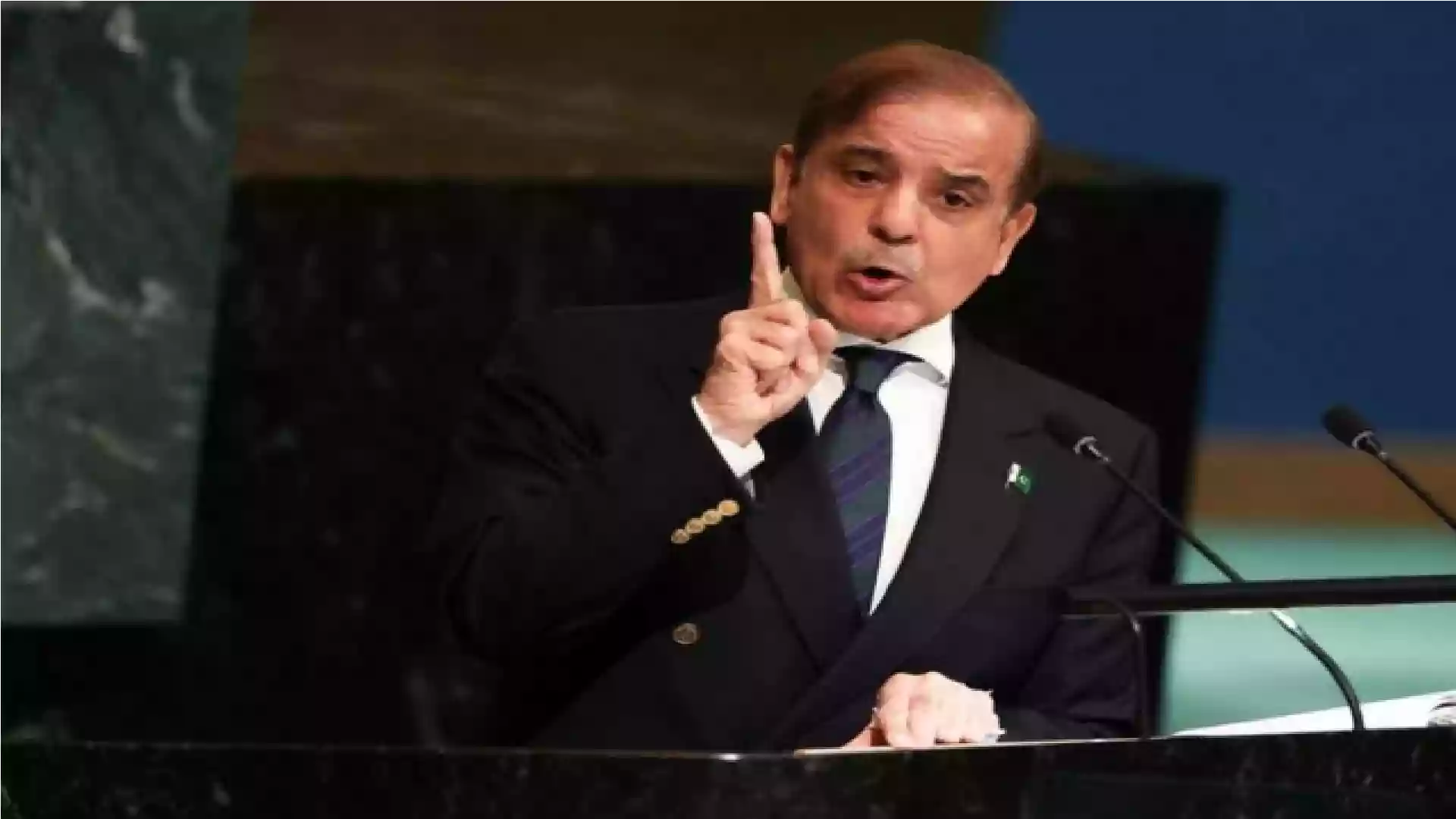
In a charged address that electrified the halls of the United Nations General Assembly, Pakistan's Prime Minister Shehbaz Sharif transformed the global stage into a bilateral battleground, devoting much of his speech to sharp critiques of India while lavishing praise on U.S. President Donald Trump for his purported mediation in a recent border flare-up. The 80th UNGA session, already simmering with geopolitical undercurrents, witnessed Sharif recounting the "unprovoked aggression" from India during the four-day May conflict dubbed Operation Sindoor—a swift Indian military response to the April 22 Pahalgam terror attack that claimed 26 lives in Jammu and Kashmir. Sharif claimed Pakistan downed seven Indian jets and inflicted a "bloody nose" on its neighbor, rejecting India's offer for joint probes as a ploy for political mileage, and vowed decisive retaliation against future threats.
Yet, in a surprising pivot, he lauded Trump as a "man of peace" for brokering the ceasefire, even floating a Nobel nomination for the U.S. leader amid whispers of their recent sideline meeting. This blend of defiance and diplomacy underscored Sharif's balancing act: rallying domestic support on Kashmir while signaling openness to talks, all against the backdrop of strained ties exacerbated by India's suspension of the Indus Waters Treaty, which he branded an "act of war." As delegates shifted uncomfortably, the speech reignited old rivalries, prompting an immediate Indian right-of-reply that branded it "absurd theatrics."Sharif's rhetoric on Kashmir struck a familiar chord, invoking UN resolutions for an "impartial plebiscite" to grant self-determination to the region, a longstanding Pakistani refrain that paints India's 2019 revocation of Article 370 as a democratic betrayal.
He positioned Pakistan as the steadfast ally of Kashmiris, decrying what he called New Delhi's "provocative leadership" and "Hindutva" agenda that, in his view, fuels unrest and human rights abuses. This narrative, delivered with the gravitas of a leader fresh from Islamabad's corridors, wove in accusations of Indian duplicity—spurning investigations into Pahalgam while allegedly exploiting the tragedy for electoral gains. Sharif's words echoed the frustrations of a nation grappling with economic woes and internal militancy, using the UN platform to amplify calls for composite dialogue on all issues, from water-sharing to border peace. Yet, beneath the eloquence lay a strategic calculus: by framing Pakistan as the victim of aggression, Sharif sought to internationalize the dispute, drawing in sympathetic voices while subtly nodding to Western mediators like Trump.
The Indus Waters Treaty, a 1960 World Bank-brokered pact that's weathered wars and monsoons, emerged as Sharif's starkest indictment, with him thundering that India's abeyance—imposed post-Pahalgam as a counter to cross-border terrorism—amounts to "economic warfare" starving Pakistan's parched farmlands. He painted vivid pictures of farmers in Punjab and Sindh facing ruin from diverted rivers, urging the UN to intervene and restore the treaty's sanctity. This wasn't mere hyperbole; with climate change amplifying water scarcity, Sharif's plea resonated as a cry for survival, linking bilateral tensions to broader global inequities. In a deft rhetorical flourish, he contrasted Pakistan's restraint—defeating terrorism on its soil—with India's alleged aggression, positioning his country as a bulwark against extremism rather than its exporter.
Trump's shadow hovered prominently, with Sharif's effusive endorsement of the U.S. president's "peace role" marking a rare bipartisan olive branch in his otherwise combative tone. Recalling the May ceasefire, Sharif credited Trump's direct intervention for de-escalating what could have spiraled into full-scale war, a narrative that burnishes his diplomatic credentials back home while cozying up to Washington amid IMF bailout talks. This praise, laced with a Nobel quip, elicited chuckles and eye-rolls alike, but it underscored Pakistan's pivot toward transactional ties with the U.S., especially post-Afghanistan. For India, watching from across the aisle, it smacked of revisionism—Trump's claims of mediation had already irked New Delhi, which views the conflict as a unilateral success in neutralizing terror threats.
As Sharif wrapped up, invoking Islamic solidarity and sustainable development, his address left an indelible imprint: a leader unafraid to bare his nation's grievances, even if it meant upending the UN's veneer of multilateral harmony. India's riposte, delivered swiftly by First Secretary Petal Gahlot under the right of reply, was a masterclass in calibrated contempt, dismissing Sharif's speech as "absurd theatrics" from a regime with "no shame" for sheltering Osama bin Laden and glorifying terror outfits like The Resistance Front. Gahlot eviscerated Sharif's victory claims, citing Indian Air Force assertions of downing five Pakistani jets and a large aircraft during Operation Sindoor, while slamming Pakistan's April UNSC shield for Pahalgam perpetrators. Her words, laced with sarcasm—"this assembly witnessed a morning of ludicrous narratives"—reframed the conflict as Pakistan's comeuppance for sponsoring cross-border attacks, urging the world to see through Islamabad's "distorted facts." This exchange, unfolding mere hours apart, encapsulated the UNGA's theater: where speeches serve as proxies for unresolved wars, and rebuttals as salvos in an endless diplomatic duel. For Pakistan, it buys time on the domestic front, where economic headwinds demand distractions, but risks alienating moderates advocating quiet diplomacy. Globally, it spotlights South Asia's powder keg—water wars, terror shadows, and nuclear whispers—begging for fresh mediation beyond Trump's spotlight.




.webp)

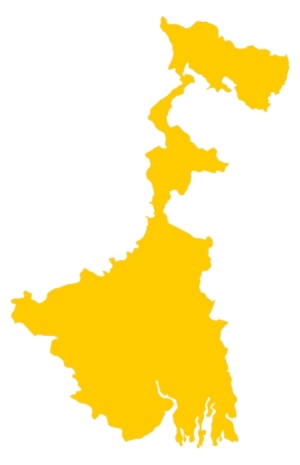 West Bengal
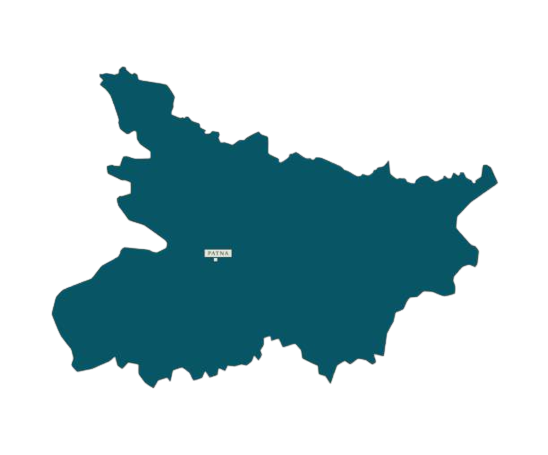 Bihar
Bihar Uttar Pradesh
 Jharkhand