
CM Suvendu releases report on July 21 firing in Assembly, calls it 'unprovoked and unjustified'
.gif)

Download Mobile App 






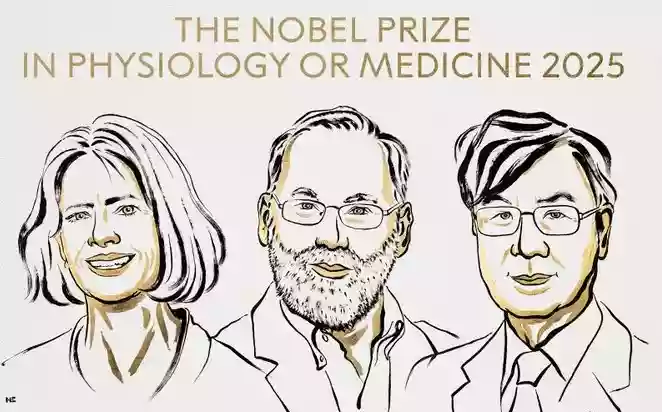
The 2025 Nobel Prize in Physiology or Medicine has been jointly awarded to Mary E. Brunkow, Fred Ramsdell of the US, and Shimon Sakaguchi of Japan for their paradigm-shifting discoveries concerning *peripheral immune tolerance*. This groundbreaking work resolves one of the most fundamental mysteries of biology: how the human body’s powerful immune system—designed to relentlessly attack foreign invaders—is simultaneously prevented from turning against and destroying its own tissues. The laureates' findings have unveiled the immune system's delicate regulatory mechanism, an internal security guard that maintains the critical distinction between 'self' and 'non-self.'
The core of their achievement lies in the identification of *regulatory T cells* (Tregs), the dedicated cells that act as the immune system's peacekeepers. Before their work, the prevailing scientific consensus focused only on central tolerance, the process where potentially self-reactive immune cells were eliminated during their development in the thymus. However, Japanese immunologist Shimon Sakaguchi first swam against the tide in 1995 by proposing a more complex model and identifying a novel class of T cells that actively suppress the immune response to prevent autoimmune disease.
Further critical evidence came from US researchers Mary E. Brunkow and Fred Ramsdell in 2001. Their work focused on the Foxp3 gene, investigating a severe autoimmune condition called IPEX syndrome in humans and a similar disorder in mice. They demonstrated that mutations in this gene directly caused these catastrophic autoimmune disorders, indicating that the Foxp3-controlled mechanism was essential for keeping the immune system in check.
The final piece of the puzzle was connected by Sakaguchi two years later. He definitively showed that the Foxp3 gene, discovered by Brunkow and Ramsdell, acts as the master regulator for the very cells he had identified years earlier. This crucial link confirmed that Foxp3 governs the development and function of the newly recognized regulatory T cells, cementing their essential role in policing the rest of the immune system to ensure tolerance of the body's own tissues and organs.
These discoveries launched the entirely new field of *peripheral immune tolerance* research. By revealing how regulatory T cells operate as the immune system’s "security guards," the laureates have provided scientists with unprecedented control points to manipulate the immune response in medicine. This is particularly significant for conditions where the immune system is either overactive or underactive.









 West Bengal
 Bihar
Bihar Uttar Pradesh
 Jharkhand