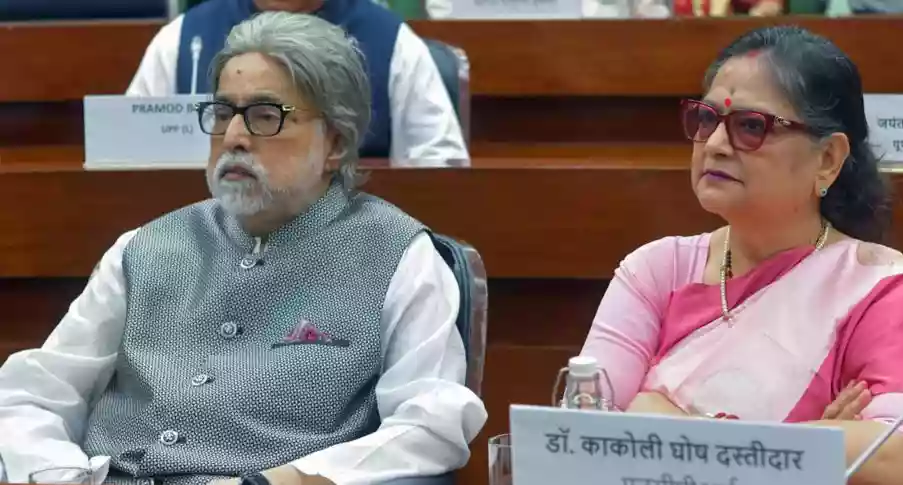
"Smaller parties shouldn't be prioritized": Sudip Bandyopadhyay hits at TMC
.gif)

Download Mobile App 






India’s economy is projected to grow between 6.3% and 6.8% in FY26, according to the Economic Survey 2024-25. The projection is based on key factors such as strong domestic economic fundamentals, fiscal consolidation, a robust external account, and stable private consumption. The forecast also anticipates higher public capital expenditure and an improvement in investment activity, contributing to growth in FY26. The survey suggests that the growth in FY26 will be supported by sustained domestic demand and strategic policy measures.
For FY25, India’s GDP growth is estimated to slow to 6.4%, marking a four-year low. This decline is attributed to weak manufacturing performance and reduced investment activity, compounded by slower global economic recovery and subdued external demand. As per earlier forecasts, India’s growth for FY25 had been projected at 6.5%-7% but was revised downward due to challenges in key sectors. The Reserve Bank of India also lowered its growth forecast for FY25 to 6.6%, down from its previous estimate of 7.2%, reflecting these concerns.
The Economic Survey notes that India’s economic fundamentals remain resilient, citing strong fiscal management, robust external account performance, and a steady growth in private consumption. The Survey stated, "The fundamentals of the domestic economy remain robust, with a strong external account, calibrated fiscal consolidation, and stable private consumption." The survey also highlights the expected rebound in investment activity in FY26, supported by increased public sector capital expenditure and improving business sentiments.
Inflation in India is expected to remain under control, with risks from higher commodity prices being limited in FY26. Food inflation is projected to ease in Q4 FY25, driven by a seasonal decline in vegetable prices and the arrival of the Kharif harvest. Additionally, the Rabi harvest is expected to help stabilize food prices in the first half of FY26. However, the survey flagged risks such as adverse weather conditions and international agricultural price fluctuations, which could affect food prices and inflation in the medium term.
India’s foreign exchange reserves have shown significant growth, rising from USD 616.7 billion in January 2024 to USD 704.9 billion in September 2024, before moderating to USD 634.6 billion as of January 2025. These reserves continue to cover 90% of India’s external debt and provide an import cover of over ten months, demonstrating the country’s strong external position. The stability in capital flows, along with healthy remittance inflows, has played a key role in strengthening India’s macroeconomic outlook.
The formal employment sector has seen substantial growth, with net Employees' Provident Fund Organisation (EPFO) subscriptions more than doubling from 61 lakh in FY19 to 131 lakh in FY24. This reflects the ongoing formalization of the labor market and the expanding reach of formal sector employment. The survey also noted that fiscal discipline, alongside a surplus in services trade and strong remittance inflows, has contributed to India’s overall economic stability. However, it emphasized the need for continuous policy measures to address the challenges posed by global economic and political uncertainties.
In conclusion, the Economic Survey for FY24-25 presents a cautiously optimistic outlook for India’s economy, projecting a GDP growth range of 6.3%-6.8% in FY26. Despite the expected slowdown in FY25, the survey highlighted the country’s resilient economic fundamentals, strong external reserves, and a growing formal employment sector. However, external challenges such as geopolitical tensions, global commodity price fluctuations, and adverse weather conditions remain key risks to the economic outlook. The Union Budget 2024-25, scheduled for February 1, is expected to outline policy measures aimed at supporting sustained industrial growth, promoting innovation, and strengthening MSMEs.






.webp)

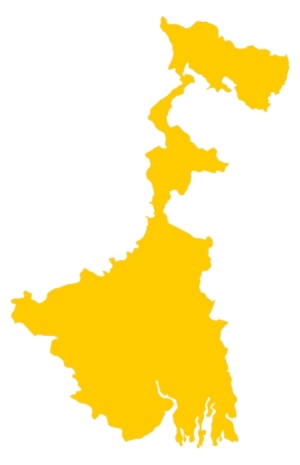 West Bengal
 Bihar
Bihar Uttar Pradesh
 Jharkhand