
Abhishek slaps 10-crore defamation notice on Madan Mitra over 'murderer' jibe
.gif)

Download Mobile App 






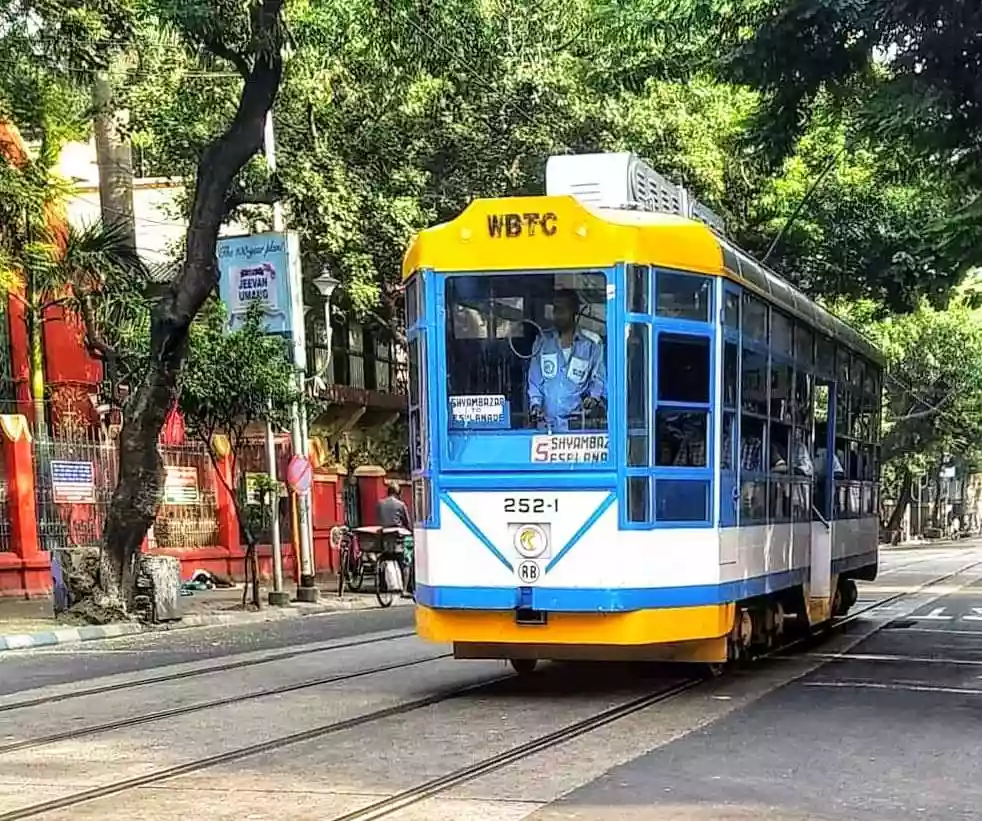
In a passionate bid to save Kolkata’s 150-year-old tram system, the Calcutta Tram Users Association (CTUA) staged a demonstration outside the Transport Bhavan on Thursday, September 4, 2025, submitting a memorandum to Transport Minister Snehasis Chakraborty. The group, comprising tram enthusiasts, environmentalists, and daily commuters, demanded the immediate restoration of tram services, which they view as a sustainable, eco-friendly, and affordable mode of public transport.
The CTUA highlighted the systematic reduction of tram routes and the conversion of tram depots into commercial spaces, urging the government to reverse these decisions and revive the city’s historic trams, a symbol of Kolkata’s cultural and industrial heritage since 1873.The Kolkata tram system, Asia’s oldest, began with horse-drawn carriages in 1873 and transitioned to electric trams in 1902, earning a place in the city’s identity.
Once boasting over 37 routes, the network has dwindled to just three functional routes due to what the CTUA calls deliberate neglect by successive governments. Many tram tracks have been paved over with bitumen, and depots have been repurposed for multinational corporations, sparking outrage among activists who see trams as a solution to Kolkata’s traffic congestion and pollution woes. The memorandum emphasizes that trams, with their high passenger capacity and zero-emission electric operation, are ideal for a city where only 6% of the surface area is road space.The CTUA’s demonstration was fueled by frustration over the state government’s recent moves to phase out trams, except for a short heritage route between Maidan and Esplanade.
Transport Minister Snehasis Chakraborty has argued that trams contribute to traffic congestion, a claim the CTUA refutes, pointing out that trams operate on fixed tracks and have an average speed of 20-30 kmph, comparable to other vehicles in Kolkata’s crowded streets. The association argues that proper traffic management and modernization of tramcars could make them a viable alternative to buses and taxis, which are costlier and less eco-friendly.The memorandum also draws attention to global trends, where cities like Melbourne, Sydney, and Hong Kong are reviving or modernizing tram systems to combat climate change. The CTUA argues that Kolkata, with its existing tram infrastructure, could lead India in sustainable urban transport if the government invests in upgrading tramcars and restoring routes. The association cited the Calcutta High Court’s 2023 directive, which formed a committee to explore tram restoration, accusing the government of ignoring these recommendations.
Activists like Debasish Bhattacharyya, CTUA president, emphasize that trams are not just nostalgic but a practical solution for affordable mobility, especially for the elderly and low-income groups.The protest saw participation from a diverse group, including students, retirees, and environmental activists, who carried placards with slogans like “Save Trams” and “Don’t Take Away Our Heritage.” The CTUA demanded the restoration of key routes like Esplanade-Kidderpore, closed since Cyclone Amphan in 2020, and the recruitment of trained tram drivers to ensure reliable service. They also proposed a public-private partnership (PPP) model, as suggested by the Calcutta High Court, to modernize tramcars with better seating, lighting, and Wi-Fi to attract younger commuters. The demonstration remained peaceful, with police and HDA officials present to maintain order.As Kolkata grapples with balancing modernization and heritage, the fate of its trams hangs in the balance, with the issue pending before the Calcutta High Court.
The CTUA’s memorandum is a rallying cry to preserve a transport system that has connected schools, hospitals, and markets for generations. While the government cites traffic concerns, tram supporters argue that removing encroachments and prioritizing trams on dedicated tracks could ease congestion. With public support growing, the CTUA vows to continue its fight, hoping to restore the rhythmic clatter of tram wheels as a soundtrack to Kolkata’s streets.




 West Bengal
 Bihar
Bihar Uttar Pradesh
 Jharkhand