
Abhishek slaps 10-crore defamation notice on Madan Mitra over 'murderer' jibe
.gif)

Download Mobile App 






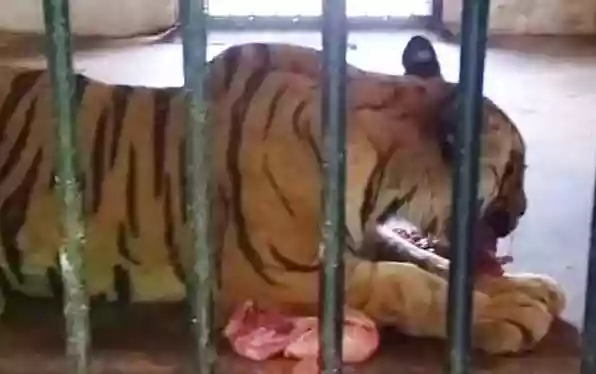
The Alipore Zoo is currently under a cloud of mystery and scrutiny following the deaths of two tigresses within a 24-hour period. The deaths of Payel and Roopa have sparked an investigation, with many questioning the circumstances surrounding their demise. Although the Forest Department has attributed the deaths to old age, a formal inquiry has been initiated to determine the precise cause.
Payel, a tigress aged 17, passed away on Tuesday. She had been brought to Alipore from the Nandankanan Zoo in Odisha in 2016. According to reports, Payel had been suffering from various age-related ailments and had significantly reduced her food intake. Despite receiving medical attention and undergoing an ultrasound three months prior, her health continued to deteriorate, ultimately leading to her death.
The very next day, on Wednesday, the zoo experienced another tragic loss with the death of Roopa, a white tigress who was almost 21 years old. Roopa was a native of the Alipore Zoo, born to the white tiger Anirban and the striped tigress Krishna. She had been battling severe health issues, including paralysis in one of her legs, which had severely limited her mobility.
The back-to-back deaths have raised concerns and led to the formation of a committee by the CWLW (Chief Wildlife Warden of West Bengal) to investigate the matter thoroughly. The bodies of both tigresses have been sent for post-mortem examinations to ascertain the exact cause of death. Additionally, viscera samples will be tested for further analysis, as confirmed by sources.
While forest officials maintain that the deaths were due to natural causes linked to old age, the suddenness of the events has created a stir. The age of the two tigresses—17 for Payel and 21 for Roopa—makes them senior citizens in the feline world, but the simultaneous deaths have prompted a deeper look into the zoo's animal care protocols and health monitoring systems.








 West Bengal
 Bihar
Bihar Uttar Pradesh
 Jharkhand