
Muzaffarpur hospital blaze kills 3 patients, leaves 20 injured
.gif)

Download Mobile App 






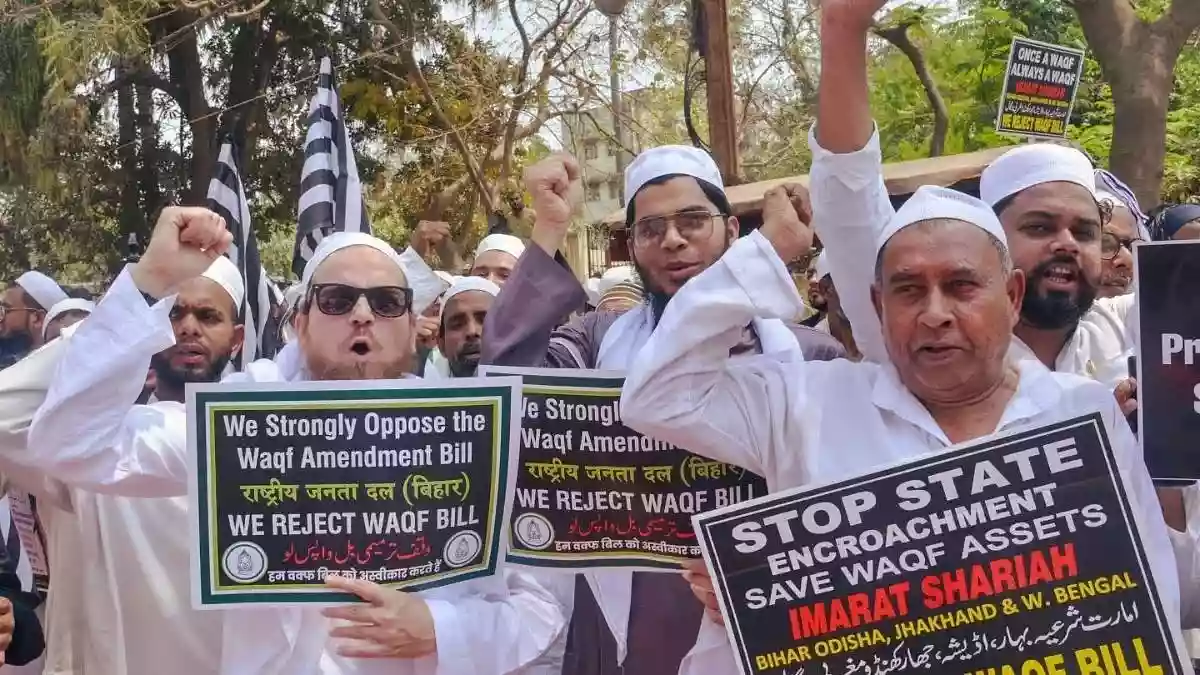
The Supreme Court today issued a significant interim order, staying key provisions of the contentious Waqf (Amendment) Act 2025. The ruling, delivered by a bench of Chief Justice of India BR Gavai and Justice AG Masih, puts a halt on two major clauses that have been at the center of a legal and political debate. The decision provides a temporary reprieve to those who challenged the constitutional validity of the new amendments.
One of the most debated provisions stayed by the Court is Section 3(1)(r), which required an individual to be a practitioner of Islam for five years before being eligible to create a Waqf. The bench reasoned that this condition cannot be enforced until state governments formulate clear rules to determine and define who qualifies as a practitioner of Islam. This decision addresses a core concern raised by petitioners about the ambiguity and potential misuse of the clause.
In a move that upholds the principle of separation of powers, the Supreme Court also stayed the provision that allowed government officers to adjudicate disputes over Waqf property encroachments on government land. The Court ruled that allowing executive officers to decide such judicial matters would be unconstitutional. However, it clarified that no third-party rights can be created on such properties until a final decision is made by a proper Tribunal.
The bench also clarified its position on other aspects of the Act. While it did not stay the provision that allows for non-Muslim members on Waqf Boards, it made a crucial observation. It stated that, wherever possible, ex-officio members on the board should be Muslims. The Court also specified limits on the number of non-Muslim members, setting a maximum of four for the Central Waqf Council and three for State Boards.
The interim order comes after the bench heard arguments over a period of three days before reserving its decision on May 22. The petitions, challenging various provisions of the 2025 amendments, were filed by a diverse group of petitioners, including political leaders, civil rights groups, and religious organizations. Notably, intervention applications in support of the law were filed by several BJP-led states.
Reacting to the Court's order, Syed Qasim Rasool Ilyas of the All India Muslim Personal Law Board (AIMPLB) expressed satisfaction, stating that many of their major concerns have been addressed. He highlighted that the Court has accepted their key points, including the issue of 'Waqf by User' and the protection of monuments from third-party claims, signaling a positive step for the community.








 West Bengal
 Bihar
Bihar Uttar Pradesh
 Jharkhand