
Abhishek slaps 10-crore defamation notice on Madan Mitra over 'murderer' jibe
.gif)

Download Mobile App 






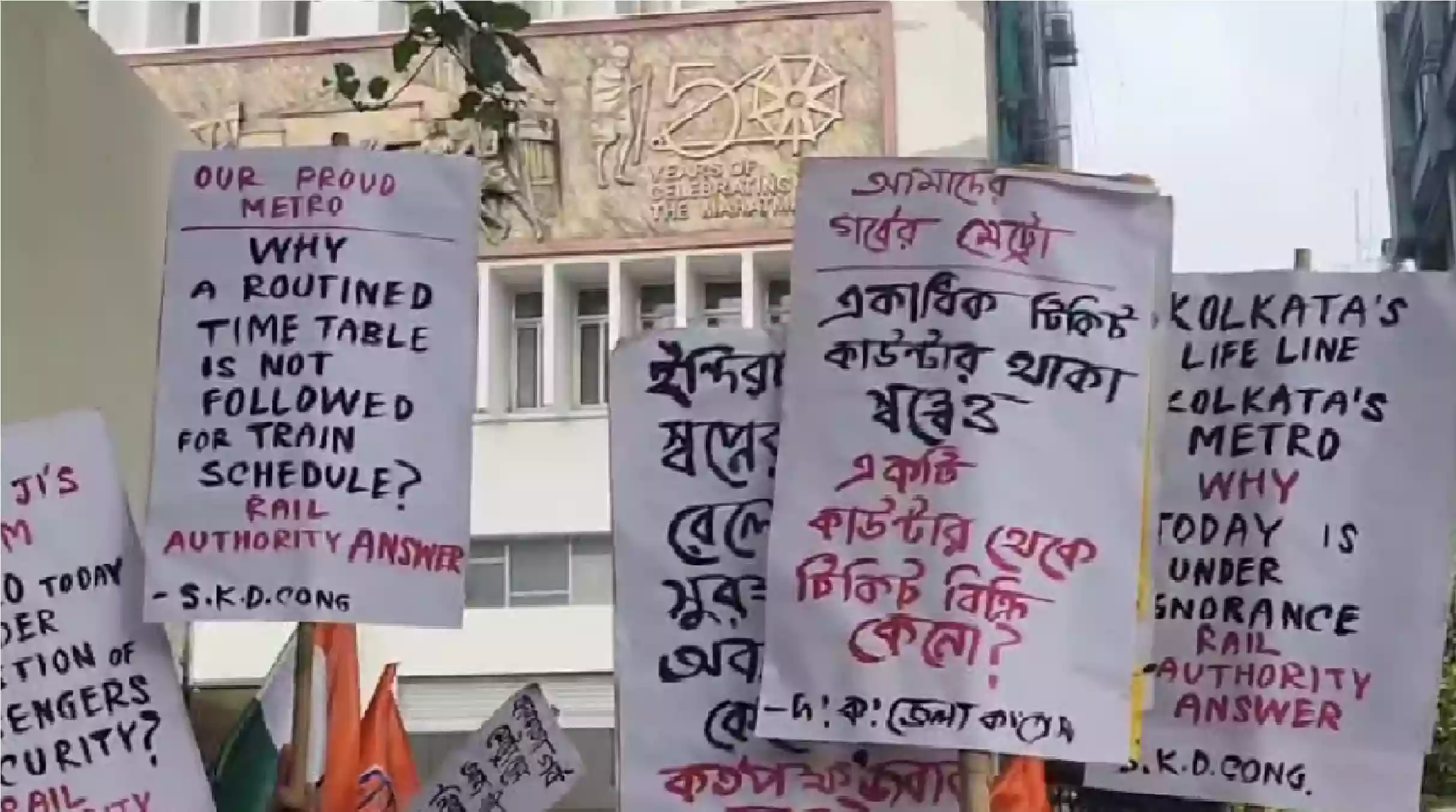
In a bold stand against what they call "extreme mismanagement and negligence" plaguing Kolkata's lifeline transport, the South Kolkata District Congress Committee staged a fiery protest and deputation at Metro Bhawan on Park Street today. Dozens of party workers, led by local leaders, gathered outside the headquarters of the Metro Railway, raising slogans and holding placards that highlighted grave concerns over passenger safety and security. The demonstration focused on six key demands, including immediate improvements to infrastructure, better emergency protocols, and accountability for repeated lapses that have endangered commuters' lives.
As Kolkata's Metro network expands amid ongoing construction delays and technical glitches, this protest underscores the growing frustration among residents who rely on it daily for their commutes. With horns blaring from nearby traffic and chants echoing through the bustling Park Street area, the event drew attention to how systemic failures are turning a modern marvel into a potential hazard, urging swift action from authorities before another incident strikes.The protest kicked off around noon, with Congress activists assembling at the iconic Park Street Metro station before marching the short distance to Metro Bhawan.
Congress carrying banners inscribed with phrases like "Stop Metro Negligence Now!" and "Passenger Lives Matter," they voiced grievances over frequent breakdowns, overcrowding during peak hours, and inadequate safety measures at stations. Local Congress president of the South Kolkata unit, speaking to the crowd, emphasized that the Metro's role as the city's backbone cannot be compromised by bureaucratic indifference. The deputation, a formal submission of their charter of demands, was handed over to officials inside the building, who accepted it amid tense exchanges.
This action comes on the heels of recent reports of signal failures and waterlogging issues that have disrupted services, leaving thousands stranded and amplifying calls for reform.Delving into the six-point demands, the Congress committee called for a comprehensive audit of Metro infrastructure to identify and fix vulnerabilities, stricter enforcement of safety regulations, and the installation of advanced surveillance and emergency response systems across all lines. They also demanded compensation for affected passengers during disruptions, regular maintenance schedules to prevent accidents, and greater public involvement in oversight committees. One demand specifically targeted the need for better training for staff to handle crises, citing past incidents where delays in response exacerbated dangers. These points were meticulously outlined in the memorandum, reflecting months of feedback from commuters in South Kolkata, an area heavily dependent on lines like the North-South corridor running through Park Street.
As the protest unfolded, police maintained a watchful presence to ensure it remained peaceful, though tensions simmered with workers refusing to disperse until their voices were acknowledged. Eyewitnesses noted the passion in the air, with families of regular Metro users joining the fray to share personal stories of near-misses due to poor lighting or faulty doors. The event disrupted light traffic around Park Street, a vibrant hub known for its cafes and offices, drawing curious onlookers and even some supportive honks from passing vehicles. By late afternoon, the deputation concluded with promises from Metro officials to review the demands, though skeptics among the protesters doubt quick changes without political pressure.This demonstration is part of a broader wave of public discontent with Kolkata's public transport, where the Metro—once a symbol of progress since its 1984 inauguration—now grapples with the strains of urban growth. South Kolkata, encompassing areas like Ballygunge and Alipore, sees heavy footfall on routes connecting to business districts, making safety non-negotiable.
Congress leaders framed the protest as a fight for the common citizen, criticizing both state and central governments for underfunding maintenance amid ambitious expansions like the East-West corridor. Community responses have been positive, with social media buzzing about the need for accountability, while rival parties have yet to weigh in officially.In the aftermath, the South Kolkata District Congress plans follow-up actions, including rallies at other Metro stations if demands aren't met within a fortnight. This could signal the start of a larger campaign to revamp the system, potentially influencing policy as elections loom. For now, the echoes of today's protest linger at Metro Bhawan, a reminder that while Kolkata's Metro connects the city, its flaws are disconnecting lives. As commuters continue their daily rides, the hope is that this outcry translates into tangible safety nets, preventing tragedy and restoring faith in one of India's oldest urban rail networks.





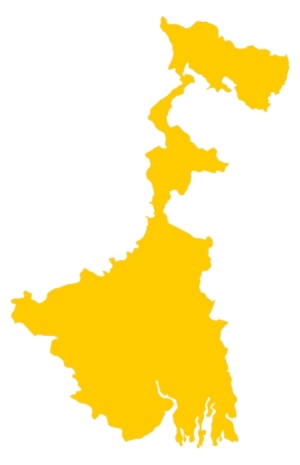 West Bengal
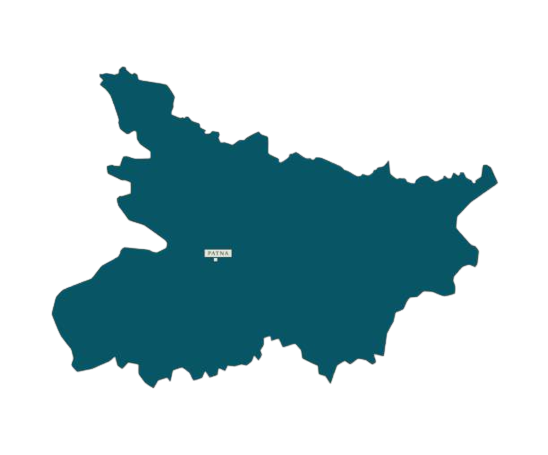 Bihar
Bihar Uttar Pradesh
 Jharkhand