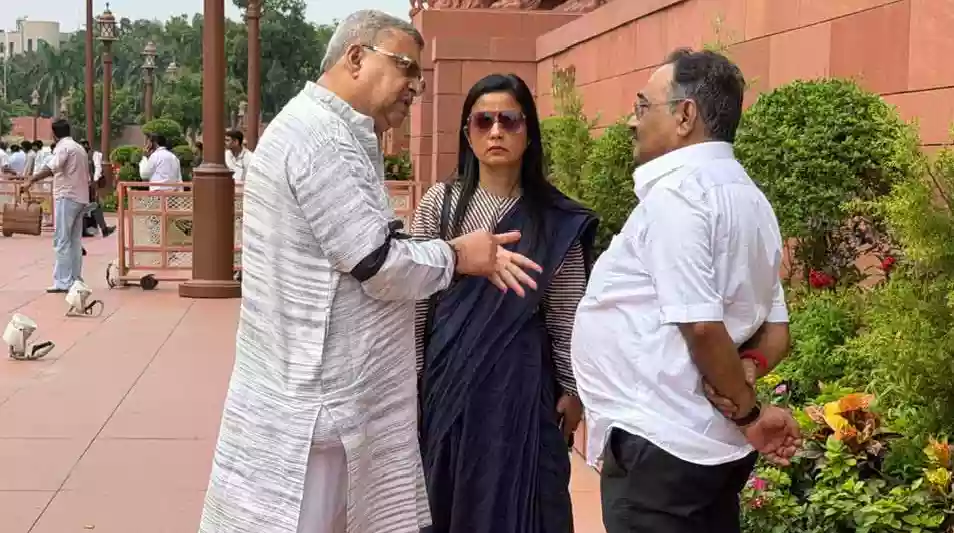
Kalyan spotted speaking with Samik at Parliament; Mahua joins in too
.gif)

Download Mobile App 







In the heart of Kolkata, under the shadow of Dr. Bidhan Chandra Roy's historic residence and marching towards the bustling Wellington Square, members of the INTUC Seva Dal staged a powerful protest today on Vishwakarma Puja, to spotlight the alarming rise in unemployment plaguing West Bengal. What began as a determined gathering of workers and youth quickly swelled into a chorus of frustration, with banners decrying the state's industrial decline and the forced migration of local talent to other parts of India.
Over the past 15 years, the region has witnessed the shuttering of numerous factories, pushing unemployment rates to new highs and forcing thousands of Bengali youth to seek low-wage, often exploitative jobs elsewhere. This demonstration wasn't just a march; it was a stark reminder of broken promises, as participants highlighted how the government's inaction has left an entire generation's future shrouded in uncertainty, with daily humiliations faced by migrant workers from Bengal becoming all too common.The roots of this crisis run deep, tracing back to a steady erosion of West Bengal's once-thriving industrial base. Factories that once buzzed with activity have lain dormant or been abandoned, leading to massive job losses that have compounded over the last decade and a half.
Official figures may understate the severity, but on the ground, families speak of breadwinners leaving home for distant states like Maharashtra, Gujarat, and Tamil Nadu, taking up menial roles as laborers or security guards. The INTUC Seva Dal, affiliated with the Indian National Trade Union Congress, framed the protest as a direct condemnation of the state government's policies—or lack thereof—that have failed to revive the economy or create sustainable employment opportunities.As the procession moved from the iconic doctor's house, named after the visionary leader who built modern Bengal post-partition, protesters chanted slogans emphasizing the irony: a state founded on progress now regressing into despair. Dr. Roy's legacy of establishing cities like Durgapur and institutions that fueled growth stands in sharp contrast to today's reality, where skilled youth are compelled to migrate, often facing discrimination and unsafe conditions in host states.
Reports of Bengali migrants enduring harassment, wage theft, and even violence have surfaced repeatedly, painting a grim picture of the human cost behind the numbers. The Seva Dal's event drew hundreds, including affected families who shared personal stories of loved ones returning battered or not at all.Government critics, including the INTUC leaders, argue that misplaced priorities—such as inadequate investment in skill development and industrial revival—have exacerbated the issue. While national unemployment hovers around concerning levels, West Bengal's rate has spiked disproportionately, with youth unemployment crossing 20% in urban areas.
The protest called for immediate interventions like job quotas for locals, incentives for reopening factories, and better protections for migrant workers. Yet, as the day wore on, the absence of any official response only fueled the crowd's resolve, turning the square into a platform for raw, unfiltered demands.The emotional toll on Bengal's youth cannot be overstated; many spoke of shattered dreams, where education leads not to opportunity but to endless job hunts or perilous journeys out of state. Women participants highlighted the double burden, as female migrants face additional risks like exploitation and isolation.
The protest underscores a broader narrative of regional disparity in India's growth story, where Bengal, once an economic powerhouse, now grapples with deindustrialization and demographic pressures from ongoing protests over related issues like teacher recruitments.In wrapping up the program, INTUC Seva Dal vowed to escalate their campaign, planning more rallies to pressure the administration. The protest served as a wake-up call, urging policymakers to address the unemployment epidemic before it spirals further. For now, the voices from the streets echo a simple plea: revive Bengal's industries, secure its people's futures, and end the exodus that is bleeding the state dry.




.webp)


 West Bengal
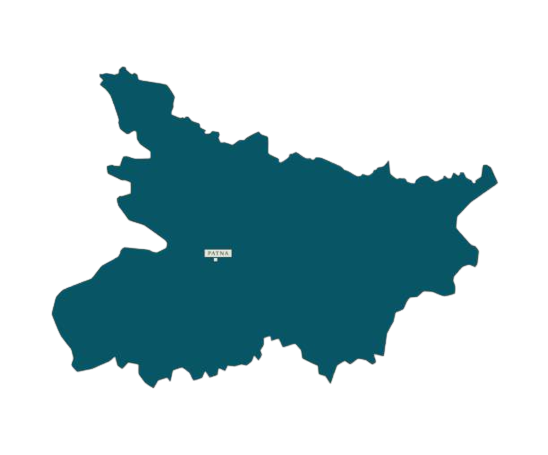 Bihar
Bihar Uttar Pradesh
 Jharkhand