.webp)
'No hawker eviction this month', orders Calcutta HC in Raliway land encroachment case
.gif)

Download Mobile App 







In a resounding salute to self-reliance that echoes the spirit of Aatmanirbhar Bharat, Prime Minister Narendra Modi inaugurated BSNL's groundbreaking 'Swadeshi' 4G network today, during a star-studded event in Odisha's Jharsuguda, catapulting India into an elite cadre of nations—alongside China, Denmark, Sweden, and South Korea—that boast fully indigenous telecom manufacturing prowess, while commissioning over 97,500 solar-powered mobile towers to blanket even the remotest corners with high-speed connectivity. This isn't just a tech rollout; it's a transformative leap, blending a cloud-based, software-driven 4G stack—crafted by Tejas Networks for the radio access, C-DOT for the core, and TCS for seamless integration—with a future-proof upgrade path to 5G, all at a whopping Rs 37,000 crore investment that promises to serve 22 million users and bridge the digital chasm for 26,700 underserved villages, including 2,472 in Odisha alone.
As Modi hit the virtual launch button, flanked by telecom giants and tribal drummers, the network flickered to life across states like Uttar Pradesh, Maharashtra, and Assam, symbolizing not mere infrastructure but a narrative of nation-building: from border outposts where jawans once strained on spotty signals to left-wing extremism hotspots now wired for progress. Amid the cheers, Union Minister Jyotiraditya Scindia hailed it as India's "fifth country, sixth company" milestone in global telecom history, underscoring how this swadeshi marvel—born from a 2021 mandate to shun foreign vendors—redefines the nation as both a voracious consumer of 1.2 billion connections and a formidable exporter of innovation, all while slashing data costs to a world-beating 11 cents per GB.The genesis of this swadeshi saga traces back to a pivotal 2021 decision, when BSNL—India's beleaguered public telecom behemoth, long eclipsed by private titans like Jio and Airtel—vowed to resurrect its fortunes through homegrown hardware, ditching reliance on Huawei and Ericsson amid geopolitical jitters and a push for 'Make in India'. What emerged from feverish R&D labs in Bengaluru and Delhi is a lean, mean 4G ecosystem:
Tejas Networks' rugged RAN tech, battle-tested in pilots across Rajasthan's deserts; C-DOT's nimble core that virtualizes the brains of the operation; and TCS's wizardry ensuring it all hums in the cloud, deployable via a simple USB stick for rapid rural rollouts. This stack, already connecting 92,600 sites and 22 million souls, isn't frozen in 4G amber—it's a springboard to 5G, with modular upgrades that could slash migration costs by 40%, a boon as India eyes spectrum auctions next year. For BSNL's 25th anniversary, the timing feels poetic, transforming a silver jubilee from somber reflection to sparkling rebirth, with Modi quipping that Odisha's "double-engine" growth now pulses with digital diesel, fueling everything from e-governance to e-commerce in its tribal heartlands.The rollout's ripple effects are as vast as the towers themselves, dotting skylines from Gujarat's coasts to Bihar's badlands, with a green twist: every one of the 97,500 sites runs on solar panels, birthing India's largest cluster of eco-friendly telecom infrastructure and slashing carbon footprints amid climate pledges at COP.
In practical terms, it's a game-changer for the hinterlands—farmers in Assam's hills streaming crop prices in real-time, students in Maharashtra's villages Zooming into IIT lectures, and security forces in Jammu's frontiers syncing drone feeds without a glitch. The Digital Bharat Nidhi (DBN) infusion, a Rs 25,000 crore war chest from Universal Service Obligation Funds, turbocharges this by saturating 29,000-30,000 hamlets with 100% 4G, targeting aspirational districts where internet penetration hovers below 20%. Yet, beneath the triumphant fanfare lies a narrative of grit and gamble: BSNL's revival from near-collapse in 2019, when subscriber losses topped 100 million, to this phoenix moment, hinged on government bailouts exceeding Rs 1.64 lakh crore and a talent exodus reversed by startup salaries for engineers moonlighting on the stack. Challenges abounded—supply chain snarls during COVID, spectrum delays that kept pilots in limbo—but the payoff is palpable: over 20 lakh new subscribers queued up pre-launch, eyeing BSNL's tariff edge, and a blueprint for 5G that could leapfrog rivals by 2027. Modi's Odisha address wove this into a broader tapestry, flagging off Amrit Bharat trains and laying IIT expansion stones for 10,000 seats, painting a picture of holistic uplift where telecom threads the needle of education, health, and housing.
For women-led self-help groups in Odisha's cooperatives, it's empowerment incarnate—affordable data unlocking online markets for handicrafts, turning weavers into web entrepreneurs.Critics, though, temper the applause with caveats: while the swadeshi stack shines in labs, real-world scalability in India's chaotic spectrum soup—plagued by interference in dense urban thickets—remains unproven, and BSNL's market share, a mere 8%, needs aggressive pricing to claw back from Jio's 40% juggernaut. Environmentalists nod at the solar pivot but prod for lifecycle audits on e-waste from tower teardowns. Still, the launch's optics are unassailable, with Modi invoking Gandhi's charkha to the smartphone, a metaphor for spinning self-sufficiency from silicon threads. As the network's first pings light up remote panchayats, it heralds a quieter revolution: data as democracy, where a herder in Himachal's heights votes via app or a medic in Manipur's meadows consults via video, all sans foreign strings attached.In the grand arc of India's digital odyssey—from 2G scams to 5G dreams—this swadeshi 4G isn't endpoint but ellipsis, a bridge to ubiquitous broadband that could add $1 trillion to GDP by 2030, per NITI Aayog projections. For the average citizen, it's the thrill of lag-free reels in Rajasthan's ravines or seamless UPI swipes in Sikkim's snows, a tangible taste of Viksit Bharat. As Modi signed off with "Jai Jagat," the towers stood sentinel, whispering promises of inclusion in an unequal world. In a nation where connectivity once cleaved classes, this launch stitches seams, proving that when India innovates, it doesn't just connect dots—it redefines the map.




.webp)


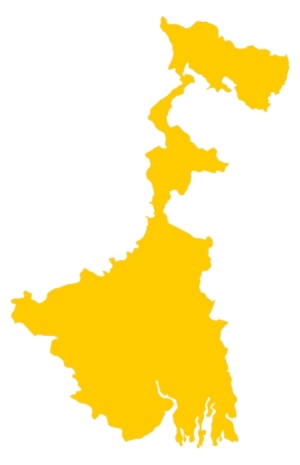 West Bengal
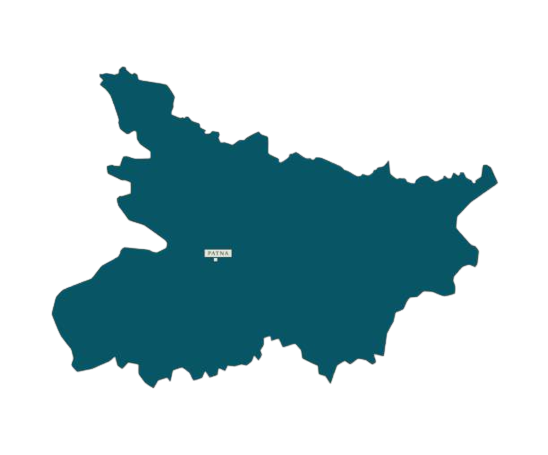 Bihar
Bihar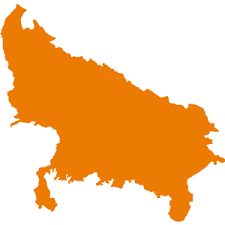 Uttar Pradesh
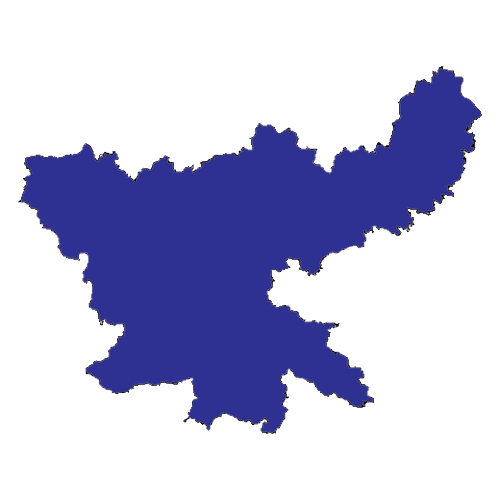 Jharkhand