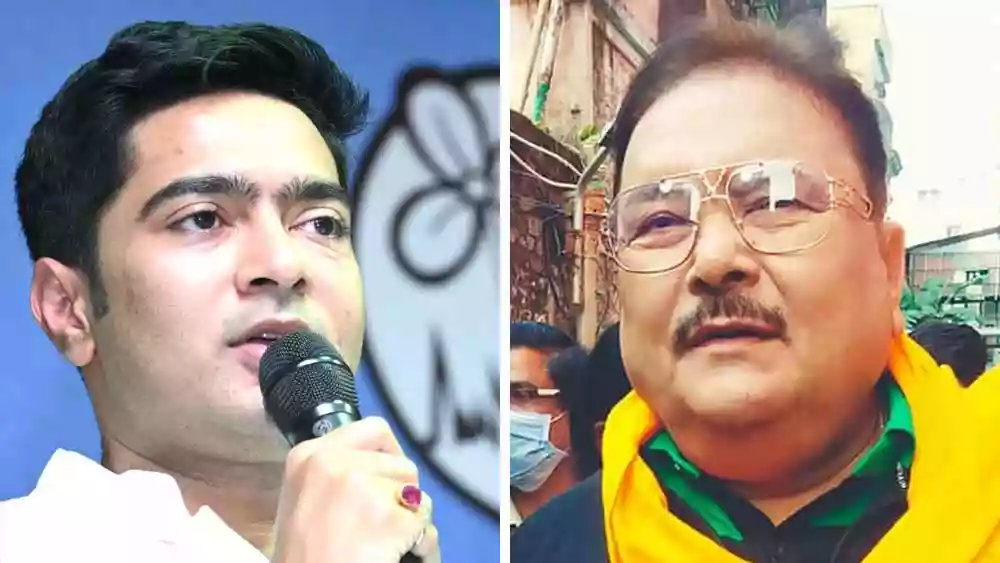
Abhishek slaps 10-crore defamation notice on Madan Mitra over 'murderer' jibe
.gif)

Download Mobile App 







In the vibrant Durga Puja Ashtami, when the air buzzes with chants of devotion and the scent of fresh marigolds, a heart-wrenching tragedy unfolded in South 24 Parganas Basanti area, casting a long shadow over the celebrations. Today, a routine journey turned into a nightmare as a speeding Toto— the humble three-wheeler that dots rural Bengal's bylanes—collides head-on with a car in the Shibganj area under Basanti police station. Among the six souls aboard the Toto, 29-year-old Rita Mandal breathed her last at the scene, her life snuffed out in an instant that left her family and fellow villagers reeling. Rita, a devoted wife and mother from Patuli, was heading back from the festivities, her heart perhaps still echoing the morning's aarti, when fate intervened cruelly. The crash not only claimed her but hurled five others into a desperate battle for survival, their bloodied forms a stark reminder of how fragile joy can be amid the festival's fervor.
Eyewitnesses described a scene of utter pandemonium, with the Toto mangled against the oncoming vehicle, metal twisting like a cruel metaphor for disrupted dreams. Local residents, roused by the screech of brakes and shattering glass, rushed to the wreckage, their festive attire stained with the urgency of rescue. "We pulled them out one by one, their cries piercing the morning calm," recounted a nearby shopkeeper, his voice trembling as he recalled the metallic tang of blood mixing with the earth's dampness.
The injured—Surjit Mandal, Bapan Barui, Rinku Barui, Sahadev Datta, and Bikash Biswas—were first ferried to the Basanti Block Rural Hospital in a frantic bid to stabilize them. Ages ranging from young adults to middle-aged breadwinners, these men hailed from pockets of Baruipur's Uttat Lalpole area and Canning's Taldi area, their lives intertwined by the simple threads of community and shared Puja spirit.
As news rippled through the village like a somber drumbeat, the injured's conditions deteriorated rapidly, turning the rural facility into a temporary war zone of beeping monitors and hurried consultations. Doctors, faces etched with grim resolve, made the swift call to escalate care, airlifting the quintet to Canning Subdivisional Hospital where advanced interventions could buy precious time. Yet, even there, the battle raged on; within hours, the gravely wounded were bundled into ambulances bound for Kolkata's Chittaranjan Hospital, the city's beacon of hope for the critically ill. En route, families trailed in a convoy of worry, phones clutched like lifelines, pleading with deities whose idols stood grandly in nearby pandals. For Surjit, Rita's kin and a fellow traveler, the pain was doubly sharp—grieving a loved one while fighting his own mangled limbs.
The exact choreography of catastrophe remains shrouded in the fog of investigation, with police from Basanti station sealing off the site and combing for clues amid skid marks and debris. Was it a momentary lapse in the driver's focus. Preliminary whispers point to high speed on both sides, the car perhaps weaving through early traffic while the Toto ferried its passengers home from dawn prayers. Rita's body, wrapped in quiet dignity, was dispatched for post-mortem at a nearby morgue, its findings poised to unravel the 'why' that haunts every such loss. Officers, notebooks in hand, have begun interviewing survivors and bystanders, piecing together timelines in a locale where roads double as lifelines and liabilities.
In Basanti, where the Sunderbans' whispers mingle with temple bells, locals now murmur of better signage, stricter patrols, and a collective vow to temper joy with caution. Rita's husband, standing vigil outside the ICU, embodies this raw resolve—his eyes red-rimmed, yet fixed on tomorrow's sandhi puja, determined that her memory fuels safer paths ahead. As time passes in this fateful Ashtami, casting golden hues over half-erected pandals, the community gathered not just in worship but in quiet mourning. Rita's portrait, adorned with sindoor and jasmine, found a place beside Devi's feet in a makeshift shrine, her story weaving into the festival's tapestry of resilience. For the injured, tubes and monitors mark a new battlefield, their recoveries a prayer answered in slow increments. In the end, this tragedy serves as a poignant interlude in Puja's grand narrative—a call to honor the divine not just in rituals, but in the everyday mercies of mindful travel. As Bengal bows to the mother goddess, may her fierce grace extend to these roads, shielding the faithful from shadows that lurk too close.



.webp)

 West Bengal
 Bihar
Bihar Uttar Pradesh
 Jharkhand