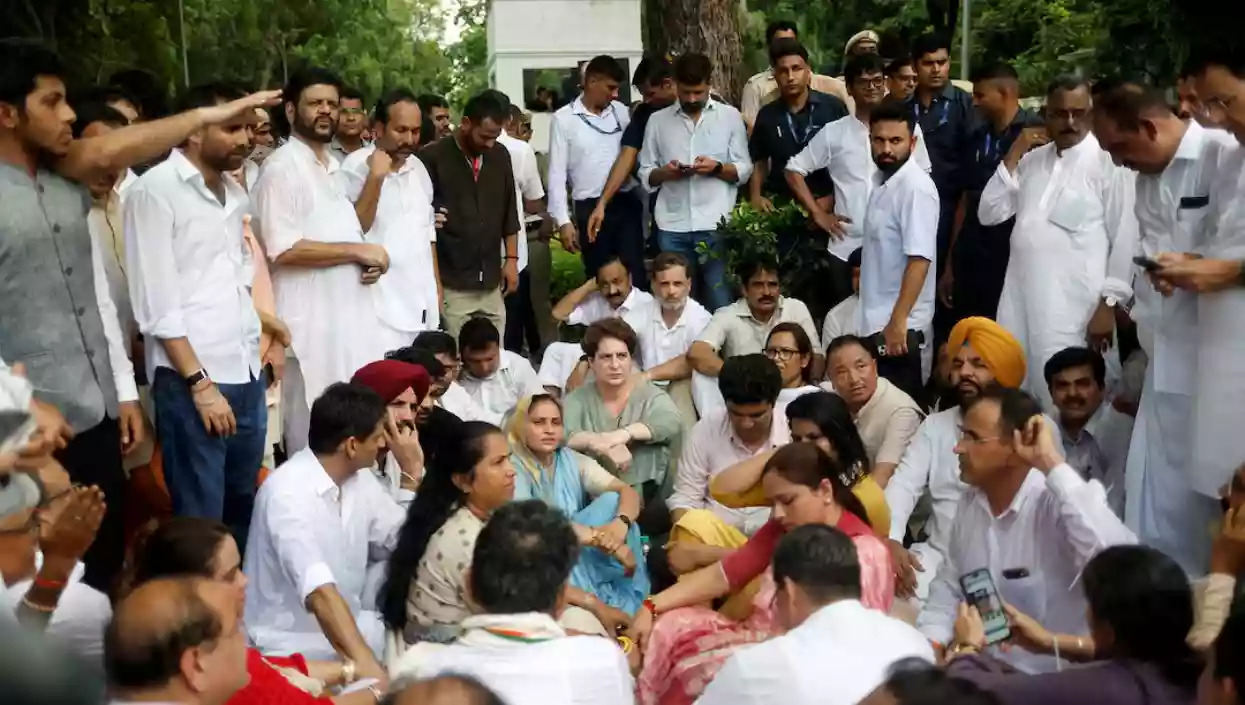
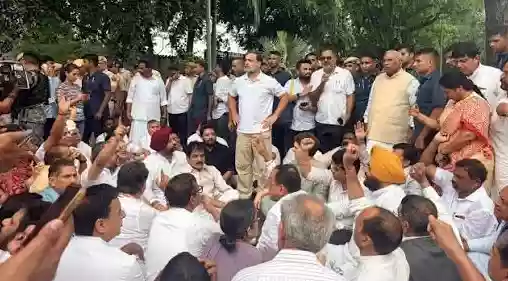
Police removes Rahul, Priyanka, other Congress leaders from dharna site near PM Modi's residence
.gif)

Download Mobile App 






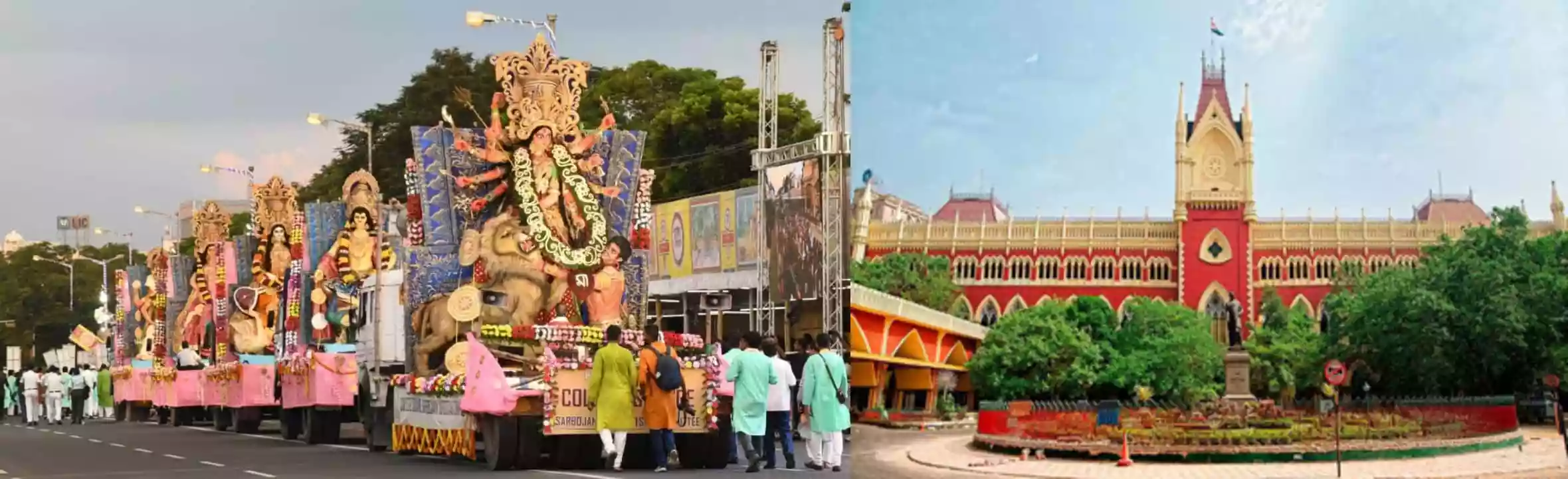
In a city still reeling from the shadows of tragedy, where monsoon fury turned Kolkata's streets into deadly traps, the Calcutta High Court has stepped in to voice the unspoken grief of a community. Just over a week ago after Mahalaya amid Durga Puja, on September 23, relentless rains flooded neighborhoods across West Bengal, claiming 12 lives in heartbreaking electrocution incidents as residents waded through electrified puddles. Now, as the vibrant beats of the Durga Puja carnival echo in Kolkata on October 5, the court has greenlit a poignant protest procession by the group 'Khola Hawa', blending raw public outrage with the festival's celebratory spirit— but only under strict conditions to ensure harmony prevails.
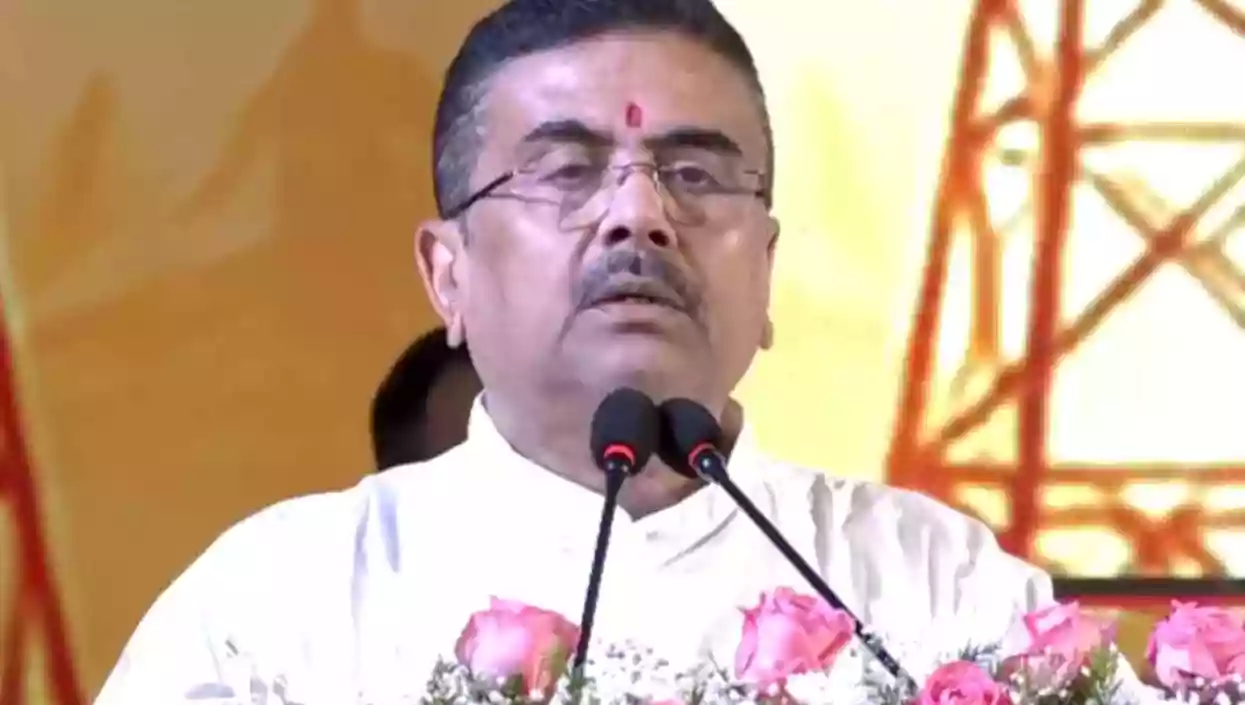
The catastrophe unfolded amid unprecedented downpours that submerged Kolkata and surrounding districts, turning everyday commutes into fatal risks. Power lines dipped perilously low, and unmaintained infrastructure amplified the horror, sparking widespread accusations against the state government's preparedness. The Bharatiya Janata Party (BJP) lambasted the administration, fueling a groundswell of anger. It was against this backdrop that 'Khola Hawa', an organization insisting on its apolitical stance despite ties to prominent BJP figures like Suvendu Adhikari and Shankudeb Panda, rallies for protest condemning this mayhem. Their planned procession—a march from College Square to Dharmatala, capped by a somber gathering—was initially rejected by Kolkata Police, citing the clash with the Durga Carnival route.
Undeterred, the group turned to the Calcutta High Court, arguing that denying their voice on this symbolic day silenced a legitimate cry for justice. The plea landed before Justice Biswarup Chowdhury's vacation bench today, where tensions simmered between the right to protest and the sanctity of cultural festivities. The petitioners' counsel painted a vivid picture of inequity: "Last year, on the very same carnival day, the court permitted a rally against the RG Kar horrors—why draw lines now for these electrocution victims?" They envisioned 5,000 marchers threading through wide Central Avenue from 4 PM to 7 PM, a route they claimed wouldn't snag the parade of glittering Durga idols.
The state pushed back fiercely, branding the event as a thinly veiled political ambush. "This isn't neutral advocacy; it's a BJP-orchestrated disruption of our government's showcase," the government's lawyer contended, referencing the earlier occured chaotic Nabanna march and questioning the timing. Why October 5 on Durga Carnival day? they probed, when any other day would suffice? They contrasted it sharply with the previous year's apolitical RG Kar protest, born from a national outcry over medical student violence. Justice Chowdhury, probing deeper, grilled both sides on logistics: How many idols from College Square and Mohammed Ali Park would converge? Could the procession sidestep bottlenecks via alternative paths like Wellington or SN Banerjee Road?
After a tense exchange, the bench struck a delicate balance, recognizing the profundity of loss while safeguarding the carnival's grandeur. Permission was granted, but with key guidelines: the headcount slashed to 3,000, the protest rally start bumped to 2 PM for an early wrap by 5 PM, and police empowered to tweak timing and route once Puja idols cleared the path. "These 12 deaths are a profound tragedy, even as the carnival lights up the city," the judge remarked, underscoring that every life lost demands reckoning, irrespective of circumstance. The petitioners nodded in agreement, vowing to honor the revised terms without a hitch.
As Kolkata hurtles toward its Durga Puja crescendo—a UNESCO-recognized tapestry of art, devotion, and community—the ruling underscores a broader tension in India's pulsating democracy. Protests aren't mere disruptions; they're the pulse of accountability, especially when infrastructure failures expose systemic cracks. Yet, in weaving this procession into the carnival's fabric, the court reminds that grief and joy can coexist, provided they're choreographed with care. For the families of the departed, this march isn't just steps on pavement—it's a defiant stride toward safer tomorrows, echoing long after the drums fade




.webp)

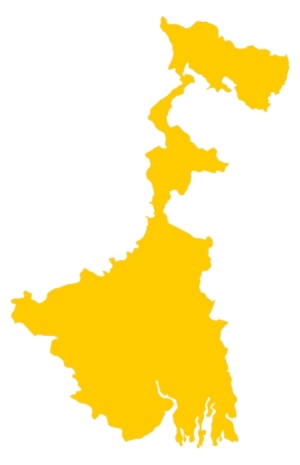 West Bengal
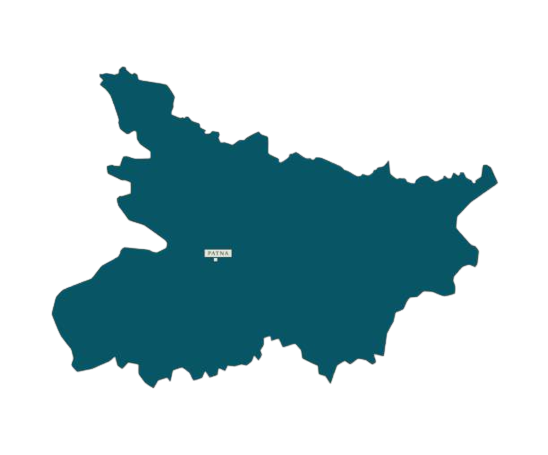 Bihar
Bihar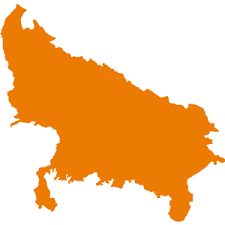 Uttar Pradesh
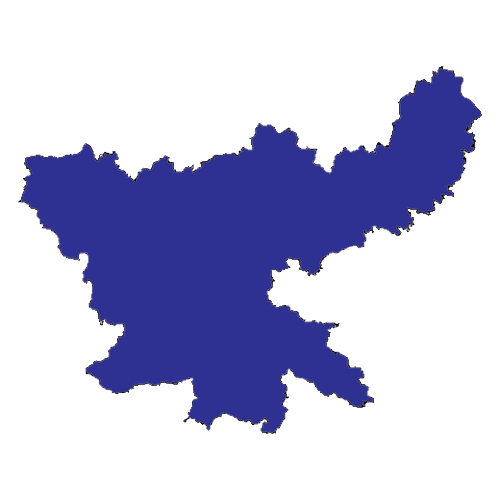 Jharkhand