.webp)
'No hawker eviction this month', orders Calcutta HC in Raliway land encroachment case
.gif)

Download Mobile App 






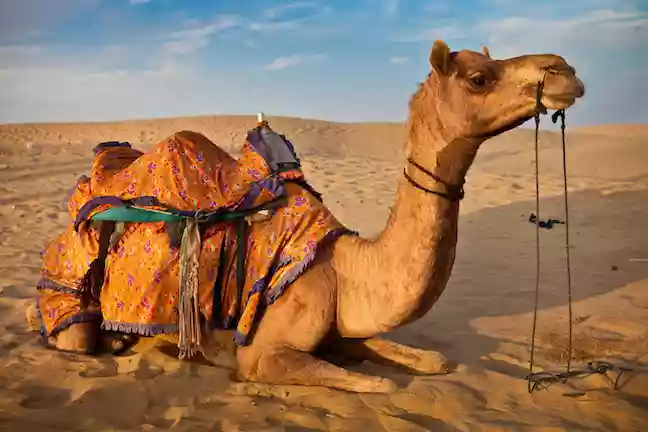
The State of Rajasthan, globally renowned as the heartland of the Indian camel, has finally ended a controversial decade-long restriction on transporting its state animal outside its borders. The decision, taken by the Bhajan Lal government, overturns a key provision of a 2015 Act, signaling a massive relief and potential economic revival for the state's traditional camel herders. The long-standing ban had, ironically, been linked to a severe reduction in the camel population and had crippled the traditional trade market.
The new order, issued by the Animal Husbandry Department, now permits the temporary migration or export of camels to other Indian states, albeit with stringent regulations. These conditions include obtaining mandatory prior administrative permission for transport, a thorough health checkup for the camel, permission specifically for temporary breeding purposes, and the requirement for the animal's return within a stipulated timeframe. This shift establishes a regulated system in place of a complete prohibition.
The original restriction was imposed nearly 11 years ago, when the then-government passed the "Rajasthan Camel (Prohibition of Slaughter and Regulation of Temporary Breeding or Migration) Act, 2015". The primary, well-intentioned aim of this legislation was conservation, which declared the camel as the state animal and banned its slaughter and all interstate sale and purchase to protect the dwindling numbers of the 'ship of the desert'.
However, the ban led to an unexpected and paradoxical outcome: it destroyed the camel's economic viability for the Raika community and other traditional herders. Denied access to profitable interstate markets, the herders were disincentivized from breeding and maintaining the animals, leading to abandonment and neglect. Data underscores this crisis, showing the camel population plummeted from 4.20 lakh in the 2007 livestock census to just 2.13 lakh in 2019, nearly a 50 percent drop.
The economic fallout of the ban was particularly visible at the famous International Pushkar Cattle Fair. Once a massive hub for camel trading, the fair saw the number of camels brought in by traders drop sharply from approximately 10,000 a decade ago to a mere 3,000 last year. With the lifting of the ban, traders and herders are now expressing high hopes for a significant increase in business and animal turnout at the upcoming fair, scheduled to begin later this month.






.webp)




 West Bengal
 Bihar
Bihar Uttar Pradesh
 Jharkhand