
"Smaller parties shouldn't be prioritized": Sudip Bandyopadhyay hits at TMC
.gif)

Download Mobile App 






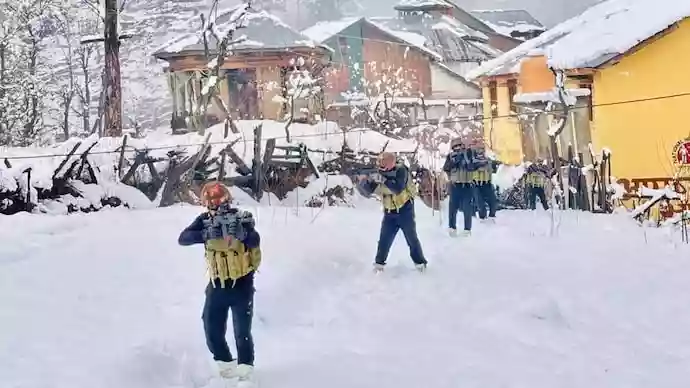
The Indian Army has launched a massive counter-terror offensive in Jammu and Kashmir, specifically targeting the Kishtwar and Doda districts, despite the onset of "Chillai Kalan"—the harshest 40-day winter phase. Intelligence reports indicate that approximately 30 to 35 well-trained Pakistani terrorists are currently active in the Jammu region. In a tactical shift, these terror groups have retreated to high-altitude ridgelines and middle mountain reaches to evade the sustained pressure from security forces in populated valleys.
Rejecting the traditional winter lull, the Army has adopted a "proactive winter posture." Soldiers have established forward winter bases and temporary surveillance posts deep within snow-capped areas to maintain continuous pressure. This strategy ensures that terrorists find no sanctuary even in sub-zero temperatures. Special winter warfare sub-units, equipped for high-altitude survival and snow combat, are conducting regular sweeps across remote valleys and dense forests to disrupt enemy supply lines.
The operation is being bolstered by a "surveillance-sweep-surveillance" doctrine, utilizing cutting-edge technology such as high-altitude drones, ground sensors, and thermal imaging radars. These tools allow the military to track heat signatures and pinpoint movement corridors even in conditions of limited visibility and heavy snowfall. The synergy between the Indian Army, Jammu and Kashmir Police, CRPF, and Village Defence Guards has significantly reduced response times for actionable intelligence.







.webp)

 West Bengal
 Bihar
Bihar Uttar Pradesh
 Jharkhand