.gif)

Download Mobile App 






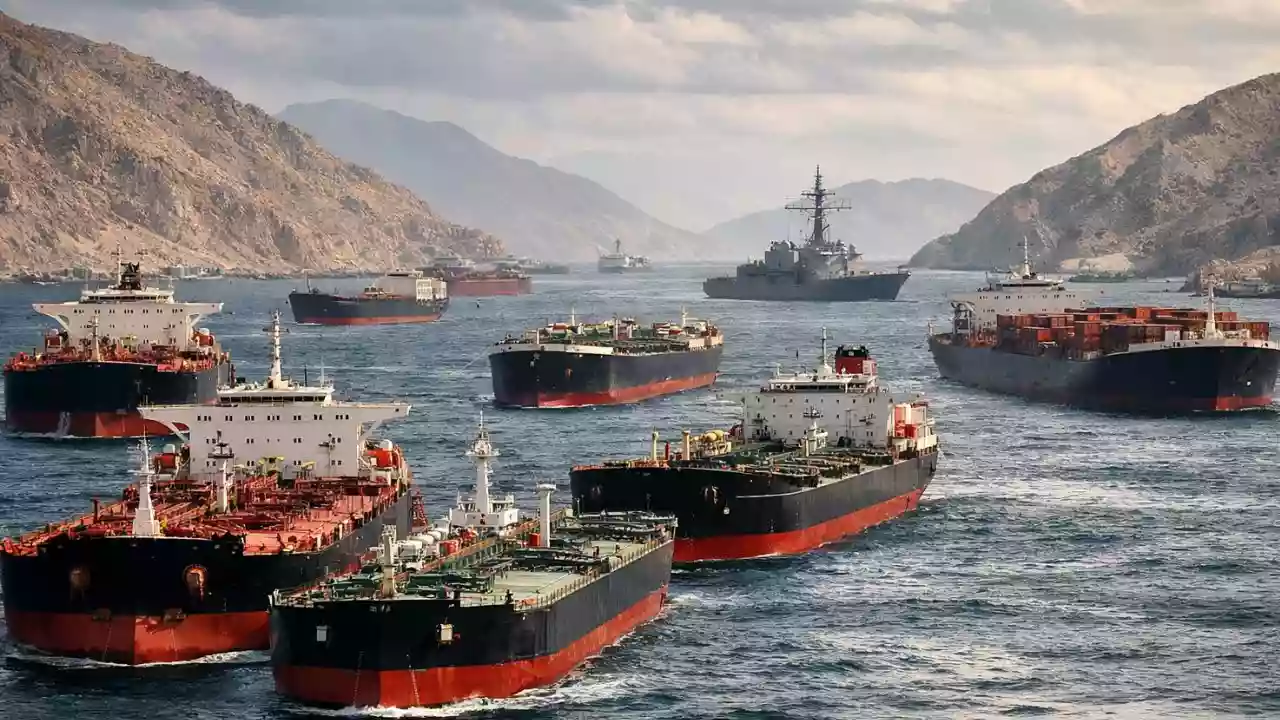
Despite the recent announcement of a ceasefire in West Asia, the strategically vital Strait of Hormuz remains a zone of high anxiety for the global shipping industry. No Indian-flagged vessel has traversed the strait since April 5, as the Indian Navy maintains a "wait and watch" policy to ensure the absolute safety of crew and cargo. While global traffic has begun to trickle through, Indian authorities are coordinating closely with Iranian officials and maritime security centers before giving the final green light for the 16 Indian-flagged ships currently stranded in the Persian Gulf.
The stranded fleet includes a diverse range of critical energy and industrial carriers, such as LNG and LPG tankers, crude oil carriers, and chemical vessels. Among them, the LPG tanker 'Jag Vikram' remains stationed off Sharjah, awaiting instructions from the Indian Navy’s escort mission, 'Operation Urja Suraksha'. Sources indicate that a first batch of 5 to 6 vessels is likely to receive clearance soon, provided the security parameters are met. Of the 25 Indian ships originally caught in the region during the height of the conflict, 9 have successfully reached safer waters under naval guidance.
Maritime security remains a significant concern, with the Information Fusion Centre–Indian Ocean Region (IFC-IOR) recording 30 hybrid security incidents in the area between the start of the conflict and April 6. These incidents, which included missile and drone strikes on 23 commercial vessels, resulted in 10 fatalities, highlighting the "critical" threat level that still persists. Furthermore, reports of Iran proposing or unofficially collecting "tolls" of up to $2 million for safe passage have added a layer of legal and financial complexity to the crisis.










 West Bengal
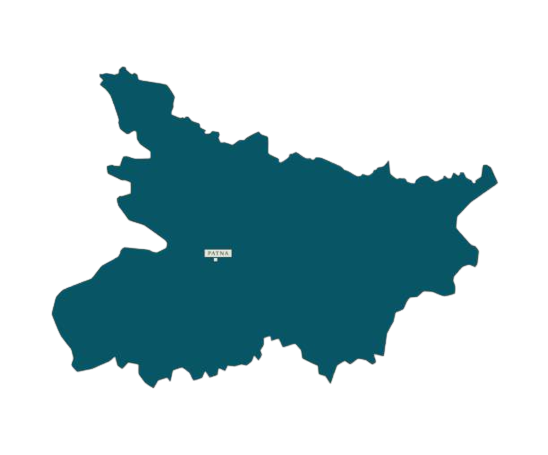 Bihar
Bihar Uttar Pradesh
 Jharkhand