
Arup Biswas is fearing arrest! Skips' appearance in Messi case citing illness
.gif)

Download Mobile App 






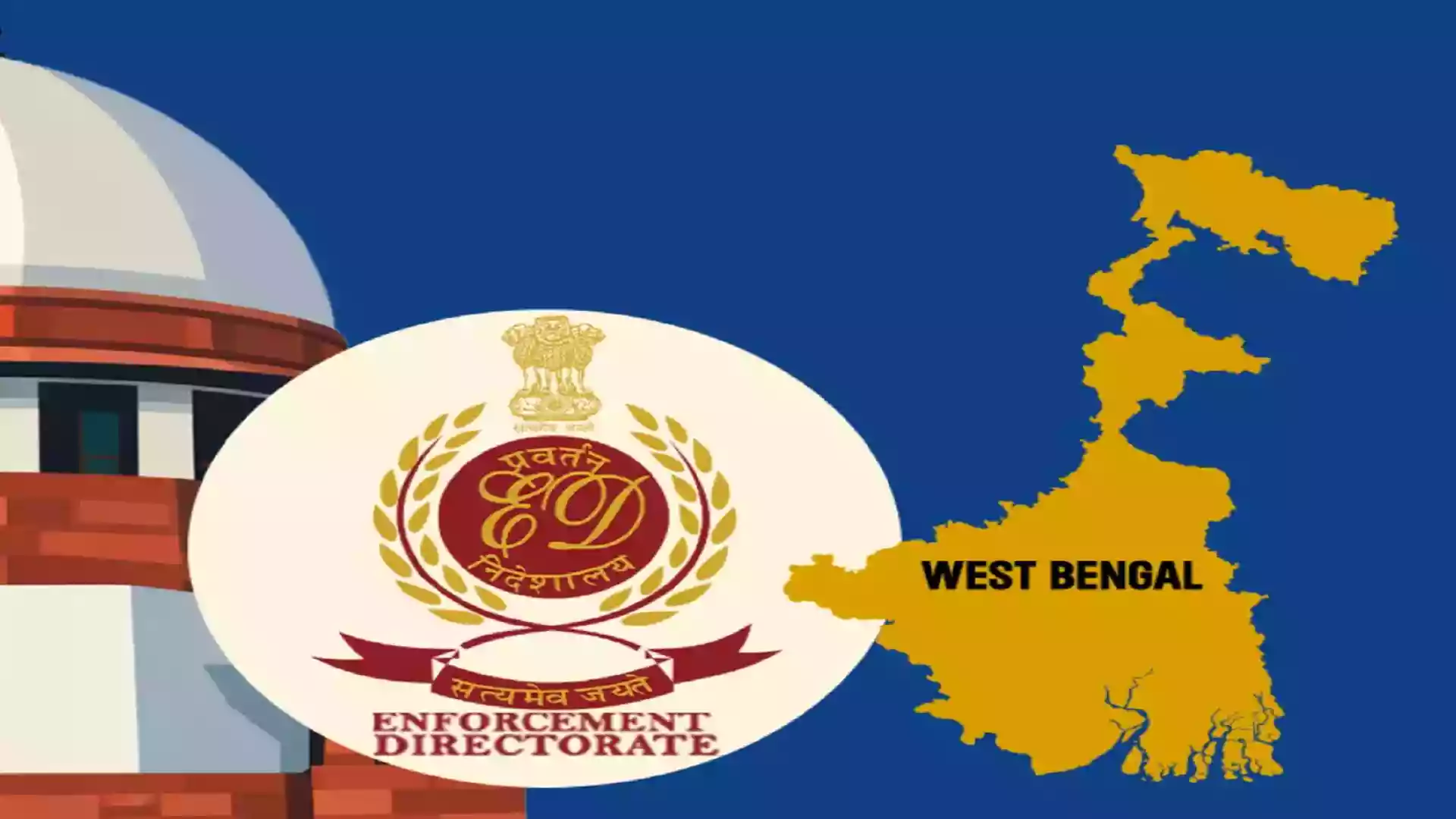
The Enforcement Directorate (ED) appeared before the Supreme Court on Thursday to clarify its stance regarding the petition seeking a CBI probe into the alleged obstruction of its raid at the I-PAC office. Solicitor General Tushar Mehta explicitly informed the bench, comprising Justice Prashant Kumar Mishra and Justice NV Anjaria, that the agency is not arguing that there has been a "complete breakdown of constitutional machinery" in West Bengal—a scenario that would typically trigger President's Rule under Article 356. Instead, the ED maintained that its core grievance is a "breach of the rule of law" caused by the physical interference of the Chief Minister and state officials during an ongoing investigation.
The ongoing hearing focuses on the preliminary issue of whether the ED’s writ petition under Article 32 is maintainable. The West Bengal government has vehemently opposed the petition, arguing that the ED, as a statutory body, cannot invoke fundamental rights to approach the Supreme Court. The State’s legal team contended that such disputes, if any, should be pursued through different legal channels, not by a central agency claiming a violation of its own fundamental rights.
In response, the Solicitor General argued that the actions taken by the Chief Minister and police officials were "extraordinary" and resulted in the direct violation of the fundamental rights of ED officers who were simply discharging their statutory duties. The Supreme Court has previously observed that a sitting Chief Minister interfering in an active investigation puts "democracy in jeopardy" and creates an "extraordinary situation." The bench has indicated that it cannot ignore the ground realities and socio-political context of the state while deciding on the legal validity of the petition.








 West Bengal
 Bihar
Bihar Uttar Pradesh
 Jharkhand