.gif)

Download Mobile App 






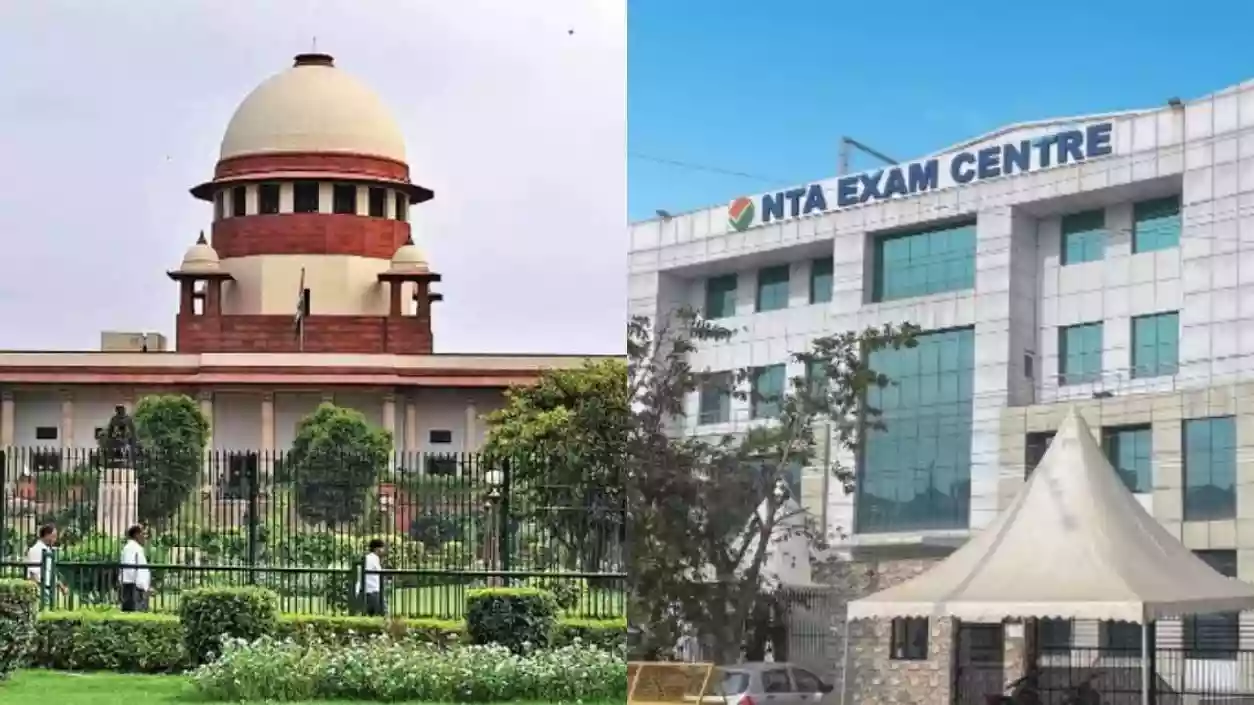
The Supreme Court on Monday sharply questioned the National Testing Agency over the NEET-UG 2026 paper leak case and directed both the agency and former ISRO chief K. Radhakrishnan to file affidavits explaining what steps were taken to implement reforms recommended after the 2024 controversy. A bench comprising Justices P.S. Narasimha and Alok Aradhe observed that it was “sad that they have not learnt their lesson” despite earlier directions issued by the court following the previous leak case. The court asked the NTA to file a compliance affidavit regarding the monitoring committee constituted in 2024 and directed Radhakrishnan, who chaired the reform panel, to detail measures taken to ensure implementation of the committee’s recommendations.
The matter came up during hearings on petitions seeking restructuring or replacement of the NTA and raising concerns over repeated examination security failures. The court issued notices to the Ministry of Education, the NTA and the CBI on pleas filed by the United Doctors Front and the Federation of All India Medical Association. The bench also directed that copies of the petitions be served to Solicitor General Tushar Mehta and listed the matter for further hearing later this week. The court noted that after the 2024 leak controversy, a high-powered committee had been formed and its recommendations were accepted, yet allegations of another leak had surfaced during NEET-UG 2026.
NEET-UG 2026 was conducted on May 3 across more than 5,400 examination centres with around 22.7 lakh candidates appearing for the medical entrance test. Within days, a “guess paper” circulated through WhatsApp and Telegram groups was allegedly found to match questions carrying nearly 600 marks out of the total 720. Investigators alleged that the material was distributed through coaching networks operating in Nashik, Gurugram, Jaipur and Sikar, with candidates allegedly paying large sums for access. Rajasthan Police’s Special Operations Group reportedly first identified the suspected leak after similarities were found between the circulated material and questions appearing in the final examination paper.
Following the controversy, the NTA cancelled the examination on May 12 and announced a re-examination scheduled for June 21. Petitioners before the Supreme Court alleged that the recommendations made by the Radhakrishnan Committee after the 2024 leak were never properly implemented. According to the petitions, the committee had proposed encrypted digital transmission of question papers for on-site printing shortly before examinations, Aadhaar-linked biometric verification, end-to-end digital candidate tracking and continuous security stress-testing systems involving ethical hackers.
The petitions further alleged that the NTA continued relying on physical transportation systems and outsourced logistics despite recommendations for structural changes. The pleas claimed the agency was “structurally incapacitated” to conduct secure nationwide examinations and sought reforms in the examination process. During proceedings, the court asked the NTA to explain the current status of the monitoring mechanism set up after the earlier controversy and directed K. Radhakrishnan to clarify compliance with the committee’s recommendations within three days.
Separately, the CBI investigation into the 2026 leak case continued on Monday with a Delhi court sending Pune-based physics lecturer Manisha Sanjay Havaldar to six days of CBI custody. Investigators alleged that Havaldar worked as a translator for NEET-UG and was linked to circulation of physics questions. According to the agency, she was identified as a key accused connected to the source of the leak. The CBI had arrested her on May 22 and produced her before the court after obtaining transit remand.

.webp)


.webp)

 West Bengal
 Bihar
Bihar Uttar Pradesh
 Jharkhand