.webp)
'No hawker eviction this month', orders Calcutta HC in Raliway land encroachment case
.gif)

Download Mobile App 






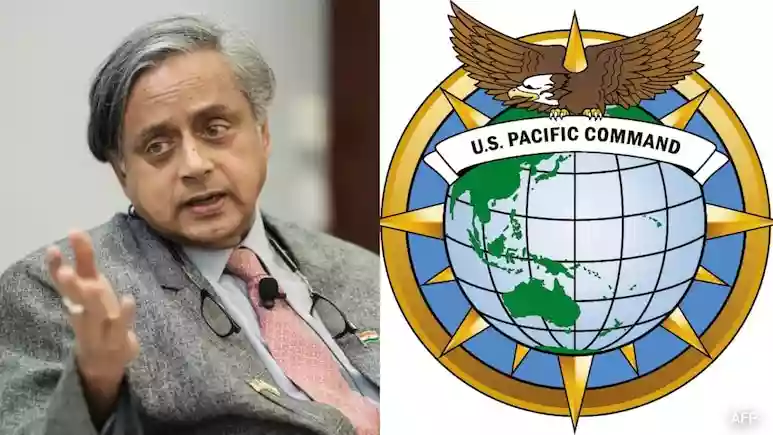
The United States government has officially rolled back an eight-year-old symbolic military designation by renaming the US Indo-Pacific Command (USINDOPACOM) back to its legacy title, the US Pacific Command (USPACOM). The decision, issued through a dynamic directive from the US Department of War, reverses a high-profile restructuring implemented in 2018 during Donald Trump's first presidential term. While Washington insists the revision merely honors the combatant unit’s deep historical roots dating back to 1947 under President Harry Truman, the move has ignited significant geopolitical speculation across South Asia regarding America's long-term commitments to regional security frameworks.
The sudden scrubbing of the word 'Indo' from the Pentagon's oldest and largest unified combatant command has triggered immediate concern within Indian diplomatic circles. Analysts point out that the change in nomenclature could signal a subtle but defining shift in Washington's strategic messaging, potentially diluting the focus on the Indian Ocean arena. Reacting to the development on social media, Congress MP and former diplomat Shashi Tharoor expressed deep skepticism, sharing the official order on X with the caption, "One more nail in the coffin of the Quad?", referencing the Quadrilateral Security Dialogue comprising India, Australia, Japan, and the United States.
In response to growing international anxiety, American defense officials have been quick to de-escalate, maintaining that the transition is strictly limited to a branding exercise. The Pentagon emphasized that the command’s core organizational structure, operational responsibilities, and regional security commitments remain entirely untouched. Headquartered in Hawaii, the massive command's area of responsibility still stretches uniquely "from Hollywood to Bollywood," covering vast waters from the US West Coast directly to India's western maritime border, as well as crucial corridors across East Asia, Southeast Asia, and Australia.
Historically, the 2018 rebranding to 'Indo-Pacific' under former Defense Secretary James Mattis was celebrated as a landmark acknowledgment of the interconnected security dynamics between the Indian and Pacific Oceans. Over the last decade, this specific framework served as a vital institutional channel for New Delhi and Washington to supercharge their defense ties through real-time intelligence sharing, expansive joint naval drills, and maritime coordination. Although the operational map remains identical for now, the reversion to the classic USPACOM banner leaves regional partners parsing whether the political optics mirror a broader American foreign policy retrenchment.






.webp)


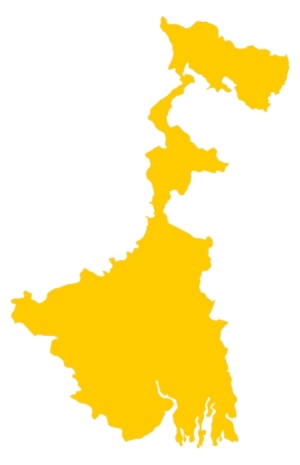 West Bengal
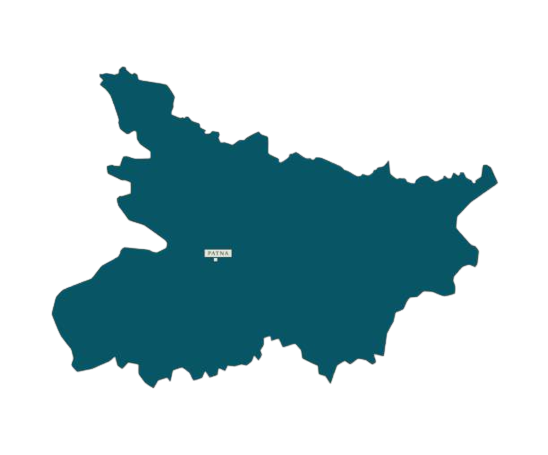 Bihar
Bihar Uttar Pradesh
 Jharkhand