.gif)

Download Mobile App 






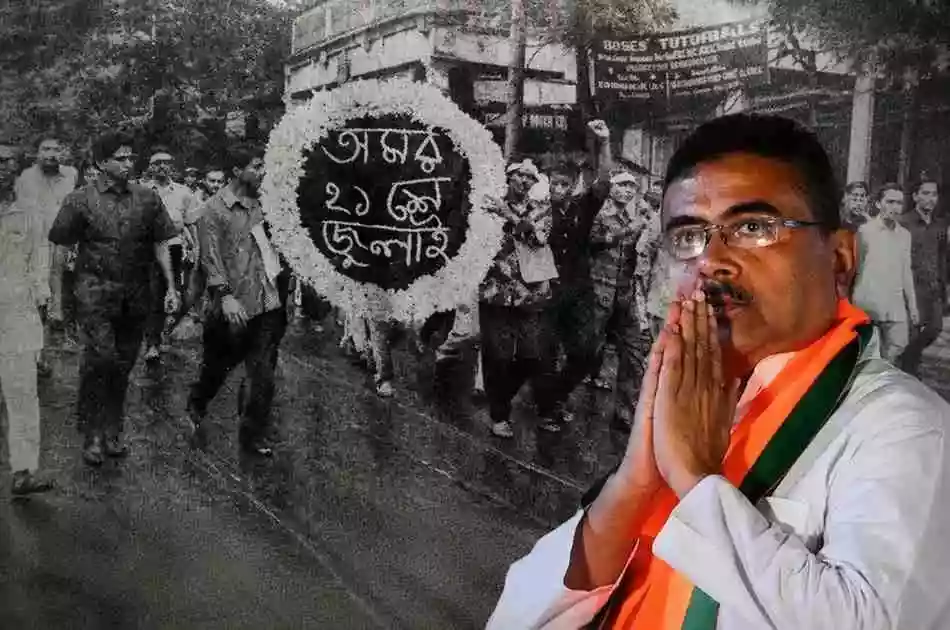
On the eve of the 33rd anniversary of the July 21 incident, Chief Minister Suvendu Adhikari tabled the long-suppressed Justice Chatterjee Commission inquiry report in the West Bengal Legislative Assembly. The report characterized the historic 1993 police firing on Youth Congress demonstrators as entirely unprovoked, unnecessary, and unjustified. According to the document read aloud by the Chief Minister, law enforcement opened fire at Mayo Road, Red Road, and Dorina Crossing based on a completely imaginary fear that protesters would storm the Writers' Buildings, which was located far from the actual clash sites.
Addressing the assembly, Chief Minister Adhikari stated that the citizens of West Bengal remain unaware of the complete reality surrounding the tragedy, which resulted in the deaths of 13 Youth Congress supporters during a march led by Mamata Banerjee in 1993. He alleged that several individuals heavily exploited the July 21 tragedy to secure political posts, travel in chartered flights, and amass extensive properties on Harish Chatterjee Street. The commission, led by retired Justice Sushanta Chatterjee, summoned 44 individuals during its probe—including Buddhadeb Bhattacharjee, Biman Bose, and Saugata Roy—but notably failed to call the individual claiming to be the primary witness.
The report highlighted severe administrative anomalies, noting that vital files were missing from the Writers' Buildings and that the official identity of whoever ordered the police to fire remains unknown. Adhikari pointed out that Manish Gupta, who was originally an accused in the case, was later appointed as a minister, causing his name to be protected from exposure. The commission concluded that the legal justification for the police firing was never proven, suggesting that the then-government withheld crucial information to shield political figures from accountability.



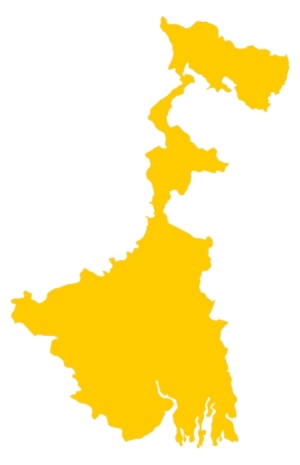 West Bengal
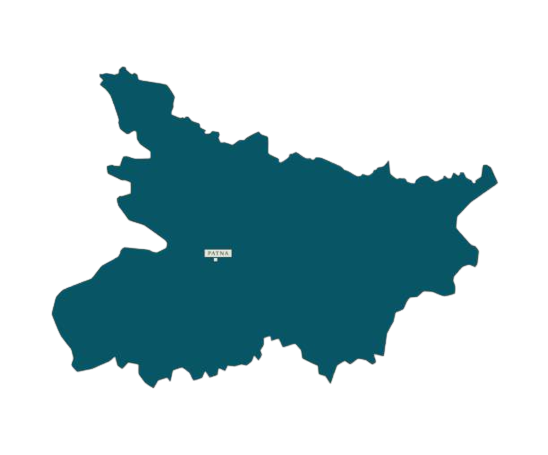 Bihar
Bihar Uttar Pradesh
 Jharkhand